
Landing Page vs Website: Which One Should You Actually Use for Lead Generation?
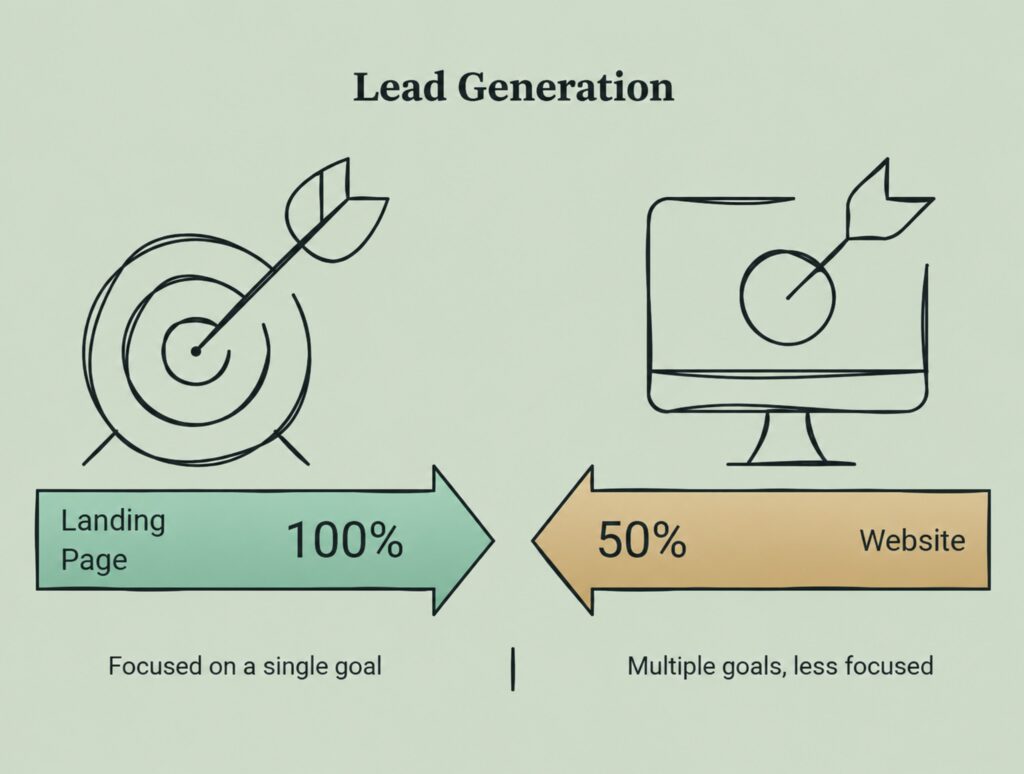
If you’ve ever sat down to plan a marketing campaign, you’ve probably run into this question at some point: do I need a landing page, or is my website enough?
It sounds like a small decision, but it’s one that quietly affects how many leads you actually get. A lot of businesses spend money on ads, drive a decent amount of traffic, and still end up with a trickle of enquiries. More often than not, the problem isn’t the ad. It’s where that ad is sending people.
So let’s break this down properly — what a website does, what a landing page does, and how to figure out which one your business actually needs right now.
Websites Are Built to Introduce You
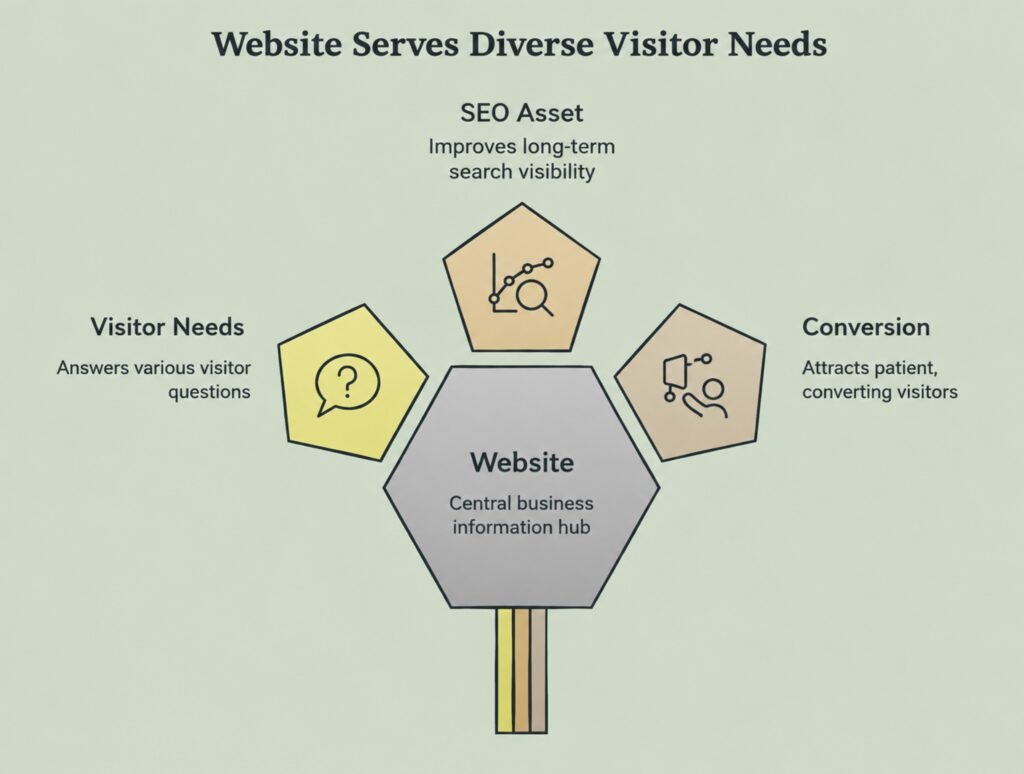
Think about your website as the place people go when they want to understand your business as a whole. It’s not chasing one action from the visitor — it’s trying to answer a bunch of questions at once: What do you do? Who have you worked with? Can I trust you? How do I get in touch?
A typical business website ends up with pages like Home, About, Services, Blog, Case Studies, and Contact — because different visitors show up looking for different things. Someone who found you through a Google search might want to read a blog post first. Someone who got referred by a friend might go straight to your case studies. Your website has to serve all of them at once, which is exactly why it has so many pages and paths.
This also makes your website your best long-term asset for SEO. Every blog post, every service page, every case study is a chance to show up in search results and bring in visitors who aren’t in a rush — but who might convert weeks or months down the line once they’ve read enough to trust you.
Landing Pages Are Built to Get One Thing Done
A landing page works completely differently. It exists for a single purpose — usually tied to one specific campaign, offer, or ad. Say a real estate developer is running Google Ads for a new apartment project. Sending that traffic to the homepage would mean the visitor lands on a page talking about ten different projects, company history, and a dozen other things they didn’t click for. Instead, a good landing page for that campaign would talk about just that one project — the location, pricing, amenities, a few photos, maybe a testimonial or two, and one clear way to act: book a site visit or leave your number for a callback.
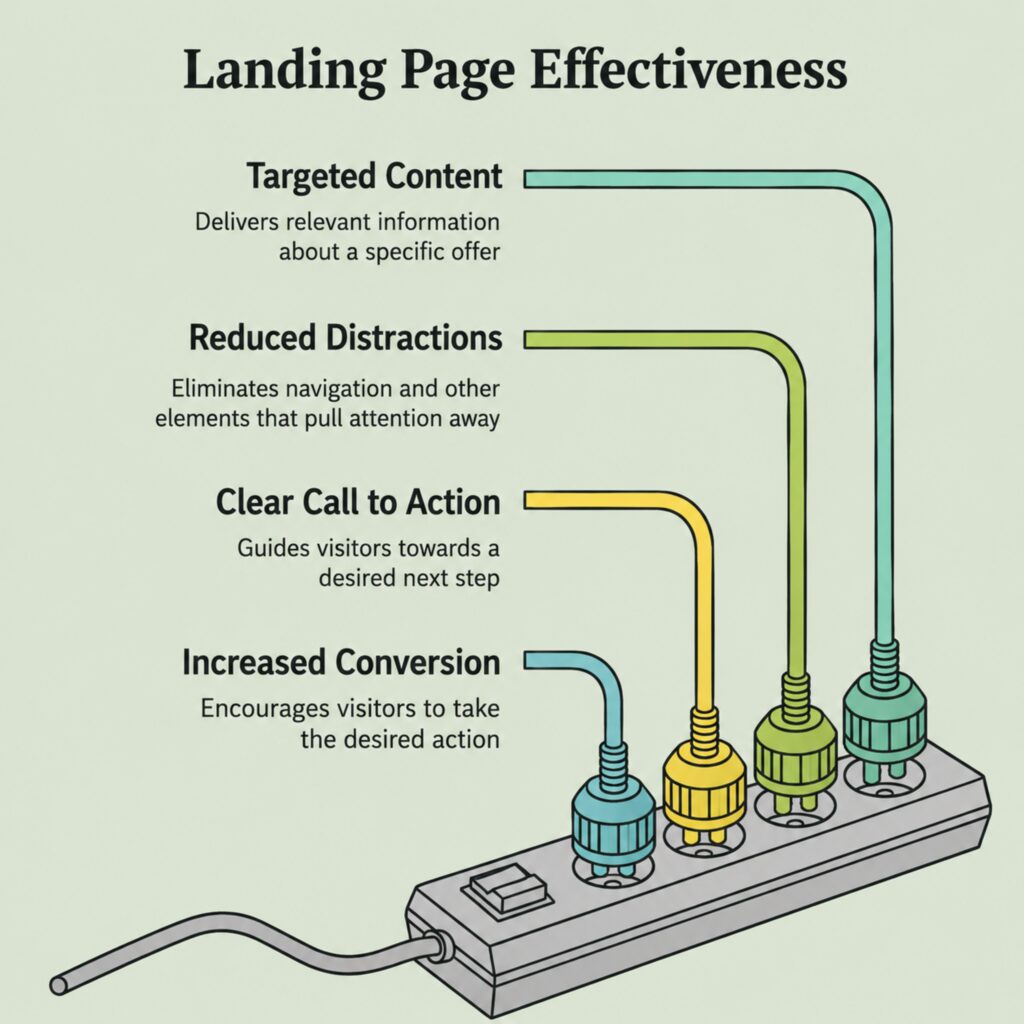
That’s the whole point of a landing page. No navigation menu pulling people away, no distractions, nothing competing for attention. Just the offer and the next step.
A landing page is built for one specific goal—usually a campaign, ad, or offer. Instead of sending a visitor to a homepage filled with multiple projects and information, a landing page focuses on one offer and highlights only what matters, such as key benefits, pricing, images, testimonials, and a clear CTA. With no unnecessary navigation or distractions, visitors are guided toward one action—book a site visit, request a callback, or submit an enquiry. In simple terms, a website helps people explore, while a landing page helps them convert.
The Real Difference Comes Down to Focus
Here’s the simplest way to think about it: a website lets people explore, and a landing page pushes people to act.
Your website is where someone browses, reads, compares, and slowly builds trust in your business. Your landing page is where someone who already has some interest gets a nudge to actually do something — fill a form, make a call, book a demo.
Neither one is “better” in a general sense. It really depends on what you’re trying to achieve at that moment.
When a Website Makes More Sense
When a Landing Page Makes More Sense
If your business offers multiple services, if customers need context before reaching out, or if you’re playing the long game with SEO and organic traffic, you need a strong website. An accounting firm offering tax filing, audits, bookkeeping, and business consulting can’t cram all of that into one page — people need room to find what applies to them.
A website is also what people check before they trust you, even if they found you through an ad. More on that in a second.
If you’re running a specific ad campaign, promoting one offer, launching something new, or trying to fill up slots for an event, a landing page usually converts better than sending that same traffic to your homepage.
The reason is simple: message match. If your ad says “SEO Services for Small Businesses” and someone clicks through to a page that says exactly that — same headline, same promise, a clear next step — they’re far more likely to take action than if they land on a general homepage and have to hunt for relevant information themselves.
Why Landing Pages Tend to Convert Better
Picture clicking an ad for “Google Ads Management” and landing on a homepage with a navigation bar listing SEO, social media, branding, web development, email marketing, careers, and an About page. You now have ten things to click instead of one. The original reason you clicked — to enquire about Ads management — gets buried.
A dedicated landing page removes all of that. The visitor sees exactly what they expected to see, and the only real decision left is whether to take the action you’re asking for.
But Don't Skip the Website Either
Here’s the part people often miss. Even if someone converts through a landing page, there’s a good chance they’ll still Google your company name before they trust you enough to actually respond to your call or reply to your email. They want to check reviews, see your past work, and confirm you’re a real, credible business.
If that search leads to nothing — or worse, an outdated or unprofessional website — you can lose a lead you already paid to acquire. This is exactly why landing pages and websites work best as a pair rather than a replacement for one another.
The Setup That Actually Works
Most businesses that generate leads consistently aren’t choosing between a website and a landing page. They’re running both, alongside SEO and paid ads, all pointing to the right place at the right time.
Your website builds credibility and brings in organic traffic. Your landing pages handle specific campaigns and offers. Your ads drive targeted traffic to those landing pages. And your website sits quietly in the background, ready for anyone who wants to check you out before committing.
A Few Mistakes Worth Avoiding
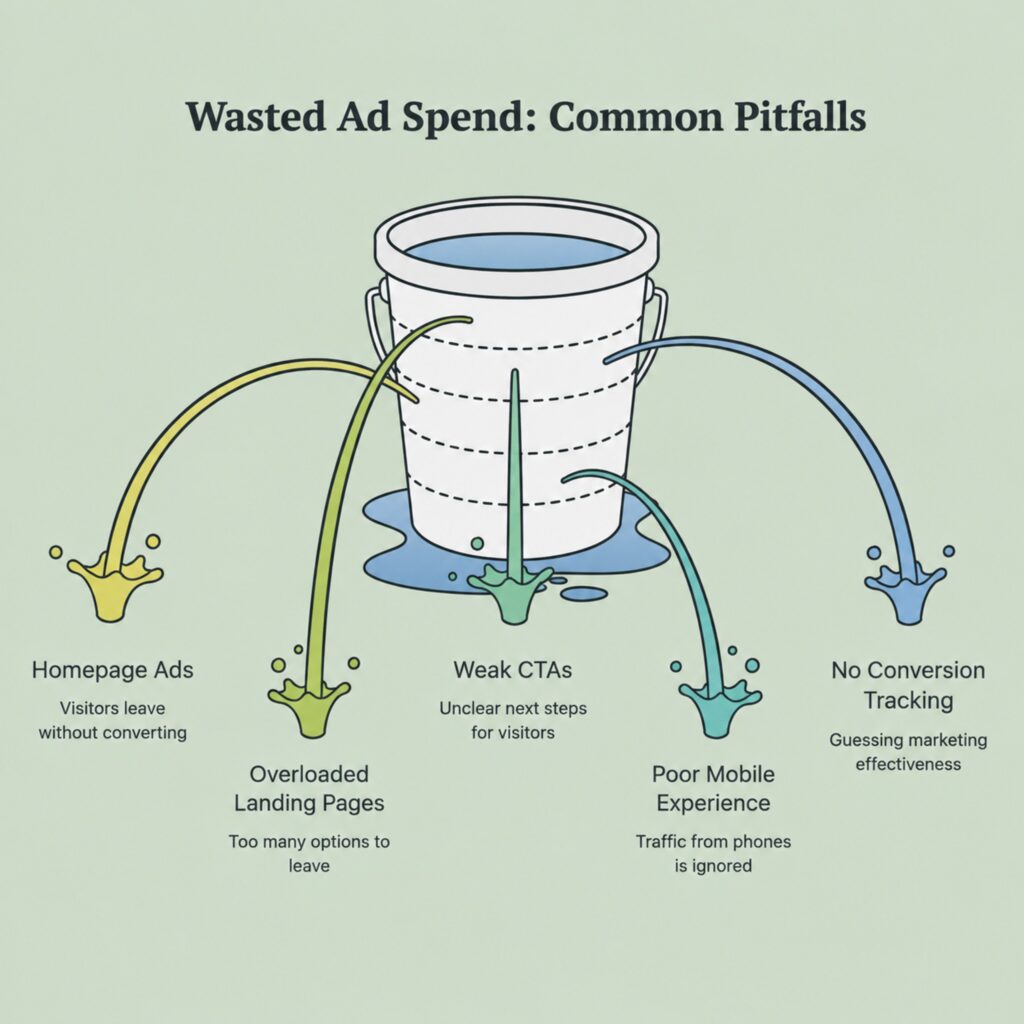
Sending every ad to your homepage is one of the most common ways businesses waste ad spend. So is overloading a landing page with too many links and buttons, which just gives visitors more ways to leave without converting. A weak CTA like “Submit” doesn’t help either — something like “Book a Free Consultation” or “Get a Quote” tells people exactly what happens next.
Mobile experience matters more than most businesses realize too, since a large chunk of ad traffic comes from phones. And without proper conversion tracking — form fills, calls, WhatsApp chats — you’re essentially guessing whether your marketing budget is doing anything at all.
Businesses should also pay attention to the quality of the traffic they’re generating. A campaign can bring in hundreds of clicks while producing very few qualified enquiries if the targeting, ad messaging, or offer is misaligned with the audience.
Track the metrics that actually matter; conversion rate, cost per qualified lead, lead quality and you’ll start to see exactly where your ad spend is leaking away.
Because more clicks isn’t the goal. What you’re really after is a smooth path: someone sees your ad, lands on a page that actually matches what they clicked on, sees a clear call to action, and converts.
So, Which One Do You Need?
If you’re starting from scratch, build a solid website first. If you already have one and want to run focused campaigns, add landing pages on top of it. The two aren’t rivals — they just do different jobs.
The real question to ask isn’t “landing page or website?” It’s “what does this specific visitor need to see before they’ll take action?” Once you know that, the right choice becomes obvious.
If you’re still not sure whether your website is helping you generate leads or quietly sending potential customers away, that’s exactly the kind of thing worth figuring out before you spend more on marketing. Book a free consultation with Digital Hike, and we’ll look at your website, understand your offer, audience, and goals, and tell you honestly what could be stopping visitors from converting into leads.
Call us at 9187138887 / 9632811130 or visit https://thedigitalhike.com/ to get started.