AI Max in Google Ads: What's Changing and What Advertisers Should Know
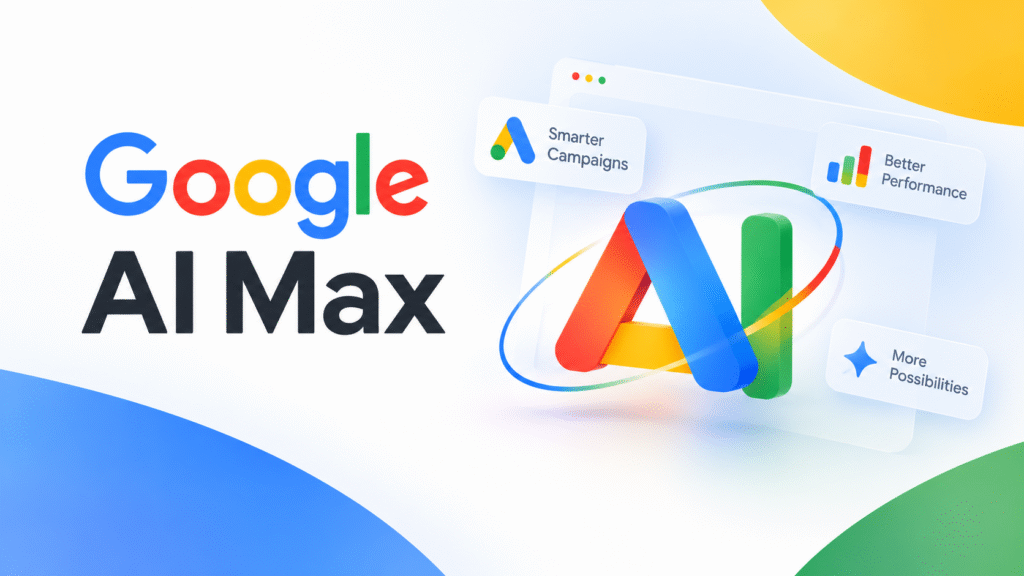
Google is making more of the decisions. Which searches trigger your ads, what the headline says and which page a visitor lands on are increasingly handled by AI rather than by you. If you run Search campaigns, that raises a fair question: how much of your campaign is still yours?
That question sits behind AI Max in Google Ads, a set of features appearing in more accounts throughout 2026. It’s easy to treat it as another automation toggle, but it touches the three things that shape paid search results: targeting, messaging and landing pages.
What Is AI Max in Google Ads?
AI Max is an optimisation layer for your existing Search campaigns. It is not a new campaign type, so you don’t build an AI Max campaign from scratch. You switch the features on inside a campaign you already run.
Your keywords, ads and website stay where they are. Google uses them as signals, then looks for extra opportunities around them.
The main AI Max features are:
- Search term matching
- Text customization
- Final URL expansion
- Brand, location and URL controls
- Enhanced reporting
How Does Google Ads AI Max Work?
The above video is a guide on how to use AI MAX for search campaigns. It changes three areas of a Search campaign: who sees your ads, what they say and there people land. Google learns from your keywords, ad assets and website content, then uses live search behaviour to decide where to stretch.
In practice, the question shifts from “which keywords should I bid on?” to “which searches show the right intent?” That’s a different way to manage PPC, and it’s why AI-powered Google Ads can feel unfamiliar.
AI Max Search Term Matching
This is the biggest change. AI Max search term matching combines broad match with keywordless technology, so your ads can become eligible for queries you never added as keywords.
So yes, it can find searches you weren’t targeting. That’s the whole idea. Whether those searches are any good is another matter. Clear buying intent is valuable. A loosely related query that never converts is just spend.
This is where conversion data matters. Google’s system learns from what counts as a conversion, so if your tracking is patchy or rewards low-value actions, the AI will optimise towards the wrong outcome. Getting conversion tracking right is the foundation.
AI Max Text Customization
Text customization was previously called Automatically Created Assets. Google can write extra headlines and descriptions using your existing ads, keywords and landing-page content, tailoring the message to each search.
So yes, it can change your ad messaging. The quality of what it produces depends on what you feed it. Vague ads and thin landing pages give the AI little to work with. You can switch the feature off, and brand controls help, but reviewing generated assets should be a habit.
Final URL Expansion
With final URL expansion, Google can send a searcher to a different page on your site if it believes that page matches the query better than the one you chose.
That makes website structure far more important. If you have clear, well-built service pages, the system has good options. If your landing pages are weak, AI Max won’t fix that and may expose it. Strong landing page design and solid on-site SEO now support your Google Ads results directly. URL exclusions let you keep traffic away from pages like careers or outdated offers.
AI Max vs Performance Max
AI Max enhances Google Ads Search campaigns. It works inside the Search structure.
Performance Max is a separate campaign type that reaches Google’s wider inventory across multiple channels. So no, AI Max doesn’t replace Performance Max. If you’re deciding where each fits, it helps to understand how Performance Max behaves on its own first.
What Are the Benefits of AI Max?
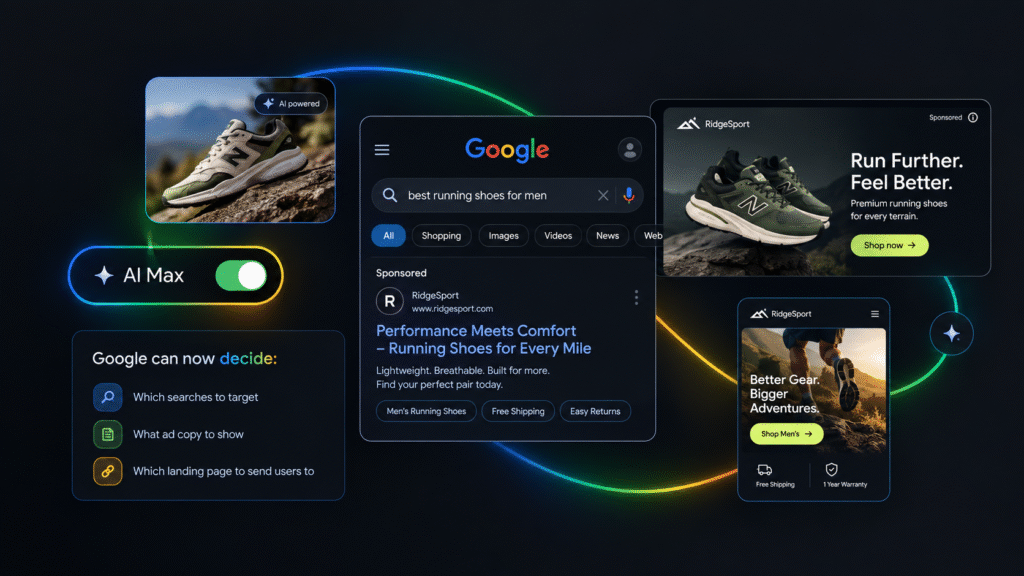
The realistic AI Max benefits look like this:
- Wider search reach: queries beyond your planned keywords
- More relevant messaging: headlines shaped around search intent
- Better landing-page matching: more suitable destination pages
- More automation: less manual asset creation
- Extra reporting: AI Max search terms, asset performance and selected landing pages
Google reports that advertisers activating AI Max typically see more conversions or conversion value at a similar CPA or ROAS, based on its internal 2025 data for non-retail advertisers. That’s Google’s own figure, not a promise for your account.
Can it improve lead generation? It’s designed to find additional opportunities and optimise Search campaigns, but the impact depends on your conversion data, targeting and website quality. Volume alone also isn’t the same as digital marketing ROI.
Does AI Max Reduce Advertiser Control?
Partly, yes. Google Ads automation gives Google more say over matching, messaging and landing pages. But you still have levers.
Negative keywords are respected when AI Max is on. Brand controls, location-of-interest controls and URL inclusions and exclusions let you set boundaries. You can also manage search term matching, text customization and final URL expansion separately. Your existing keywords stay in the campaign and act as signals.
What more automation doesn’t mean is less monitoring. After enabling AI Max, review:
- New search terms and their relevance
- Conversion data and lead quality
- Landing pages receiving traffic
- Budget pacing
Should You Use AI Max in Google Ads?
There’s no universal answer. It tends to suit campaigns with reliable conversion tracking, relevant website content and enough data to learn from. Before enabling or testing it, check:
- Conversion tracking: does it measure real leads or sales?
- Search terms: what are you already matching?
- Negative keywords: is the list current?
- Landing pages and website content: would you be happy for any page to receive traffic?
- Lead quality: can you tell good enquiries from bad?
- Campaign structure: is it focused enough to read results?
- Budget: is there room for extra queries?
- Location targeting: are settings accurate?
Google also offers AI Max experiments, which test the features against a control portion of an existing Search campaign. That’s safer than switching everything on at once.
The better question isn’t “should we use AI Max?” It’s “is our account ready for more automation?”
Not sure If your account is Ready for AI Max? The Digital Hike team can review your conversion tracking, search terms and landing pages, then help you decide whether to test AI Max. Get in touch for a Google Ads account review.
Frequently Asked Questions
What is AI Max in Google Ads?
AI Max in Google Ads is an optimisation layer for Search campaigns. It uses AI to improve search term matching, ad text and landing-page selection.
Is AI Max the same as Performance Max?
No. AI Max enhances Search campaigns, while Performance Max is a separate campaign type covering Google’s wider advertising inventory.
Does AI Max replace keywords?
No. Your keywords remain part of the campaign and act as signals, though AI Max can also match searches beyond them.
Does AI Max give Google more control over Search campaigns?
Google gains more influence over matching, messaging and landing pages, but advertisers keep controls such as negative keywords, brand and location settings, and URL exclusions.
Should advertisers use AI Max for their Search campaigns?
It depends on tracking quality, website content and lead data. Testing through an AI Max experiment is a sensible starting point.