
What Should You Fix First: Website, SEO, Ads or Social Media?
A business owner asked me last week, “Should I redo my website, or just start running ads? I don’t have money to do both right now.” It’s one of those questions that sounds simple but isn’t, because the honest answer is: it depends on what’s actually broken.
Most people trying to grow their business online eventually hit this same wall. There’s SEO, there’s Google Ads, there’s Instagram and LinkedIn, there’s the website itself sitting somewhere in the middle of all of it. And the instinct is usually to do everything at once, hoping something clicks.
But that’s rarely the smart move. If one piece of your marketing is genuinely broken, spending more on the other pieces just makes the broken part more expensive. You’re paying to send more traffic toward the same leak.
So rather than asking “SEO or ads?” a better question is: where is my business actually losing people right now? Let’s go through it.
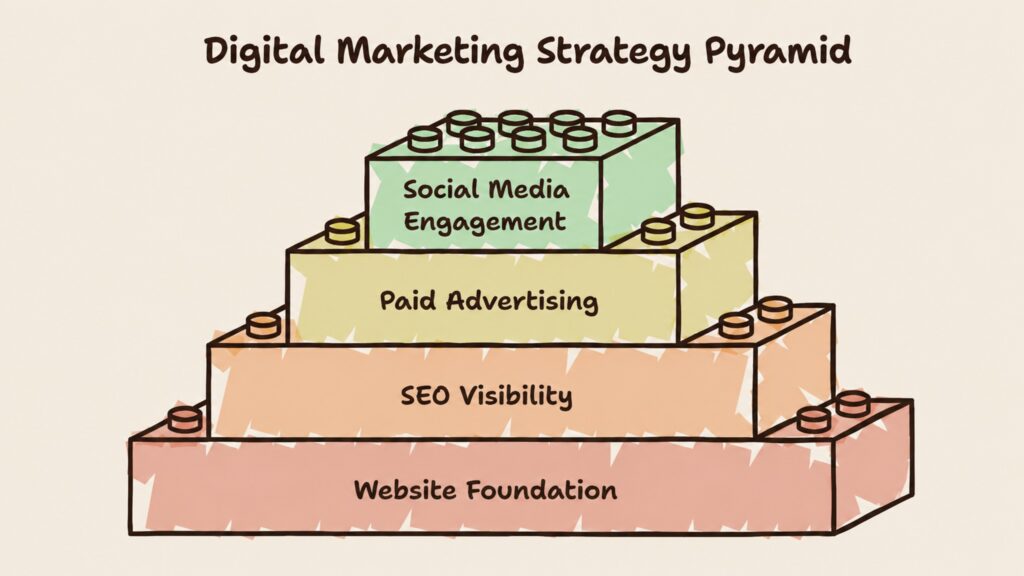
Your Website Comes First, Almost Always
Think about what your website actually does. Every ad, every SEO ranking, every social post — they’re all just ways of getting someone to click through and land on your site. Once they’re there, the website decides everything. Do they trust you? Do they stick around? Do they leave in five seconds and never come back?
If your site is slow, or it looks like it hasn’t been touched since 2016, no amount of ad spend fixes that. You’re just paying to funnel people into a dead end.
A decent website should make a few things obvious without much digging: what you actually do, who it’s for, why someone should pick you over the next option, and this one gets missed a lot what the visitor is supposed to do next. A “Contact Us” button buried three clicks deep isn’t going to cut it.
Here’s a real scenario. Someone clicks your Google Ad for “digital marketing services.” They land on a page that’s vague, maybe some stock photos and generic text, and there’s no obvious way to actually reach you. You just paid for that click. And got nothing.
So if your site isn’t mobile-friendly, takes forever to load, doesn’t explain what you do in plain language, or makes people work to contact you — that’s where to start. Not with a prettier homepage. With one that actually converts.
Once the Website Works, Think About SEO
Assuming your site is doing its job, the next problem is usually visibility. People search for what you offer, but do they find you?
That’s SEO in a nutshell, showing up when someone types in a relevant search. A real estate company, say, wants to appear for things like “flats in Lucknow” or “best real estate company in Lucknow.” Get that right and you’re pulling in traffic without paying for every single click.
It’s not instant, though. SEO touches a lot keyword research, fixing technical issues on the backend, on-page content, internal linking, local listings, and so on. It’s slow, cumulative work.
You should push SEO up the priority list if competitors keep beating you in search results, your organic traffic barely registers, your main services don’t show up when people look for them, or you know for a fact people are searching for what you do and just not finding you.
One thing worth remembering – SEO only pays off if the website underneath it can actually convert. Ranking #1 for a keyword doesn’t mean much if everyone who clicks through leaves immediately.
Need Something Faster? That's Where Ads Come In
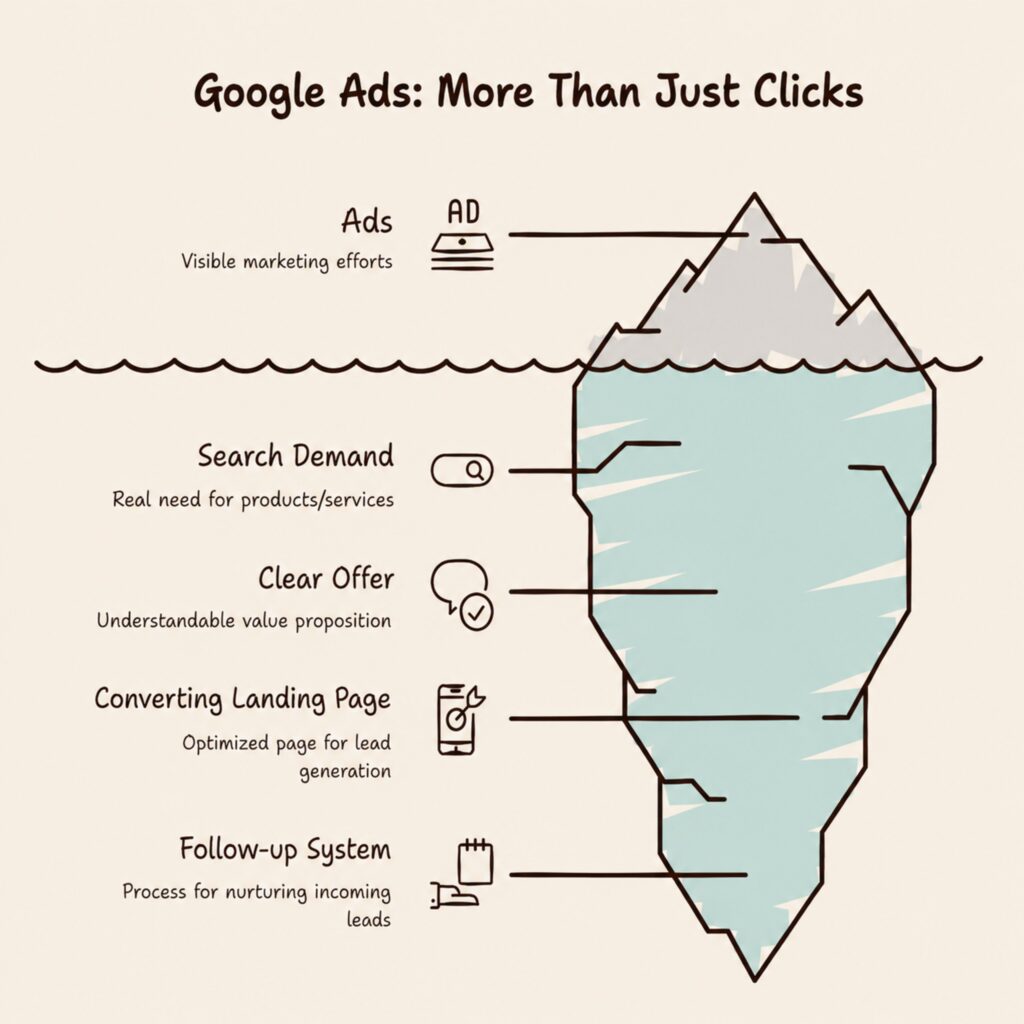
SEO takes months to show real results. If you need leads sooner, Google Ads is the more obvious lever to pull.
Ads put you in front of people at the exact moment they’re searching for what you sell which is a completely different mindset from someone scrolling Instagram. Someone typing “SEO agency near me” wants to talk to someone today. Someone watching a reel about marketing tips is probably just… watching.
But ads won’t rescue a broken sales process. If your landing page is weak, or your offer isn’t clear, or your team takes three days to call back a lead — pumping more budget into ads just means losing more money faster.
Ads generally make sense when there’s real search demand for what you do, you need traffic quickly, your offer is genuinely clear, your landing page is built to convert, and you actually have a system to follow up with the leads that come in. The point was never clicks. It’s leads that turn into paying customers.
Don't Write Off Social Media Either
Social plays a different game than search. Instagram, Facebook, LinkedIn none of them are really about getting a sale from a single post. They’re more about building familiarity. Someone sees your brand a few times, gets a feel for what you do, and eventually that turns into trust.
It’s worth investing in social if your audience genuinely spends time there, if your brand needs more visibility, if your competitors are visibly ahead of you on it, or if what you sell leans heavily on visuals — think interiors, fashion, food, that sort of thing.
That said, posting daily just to post isn’t a strategy by itself. Every piece of content should be doing something — building awareness, teaching people something, establishing that you know what you’re talking about, or nudging someone toward an enquiry.
So, What Do You Actually Fix First?
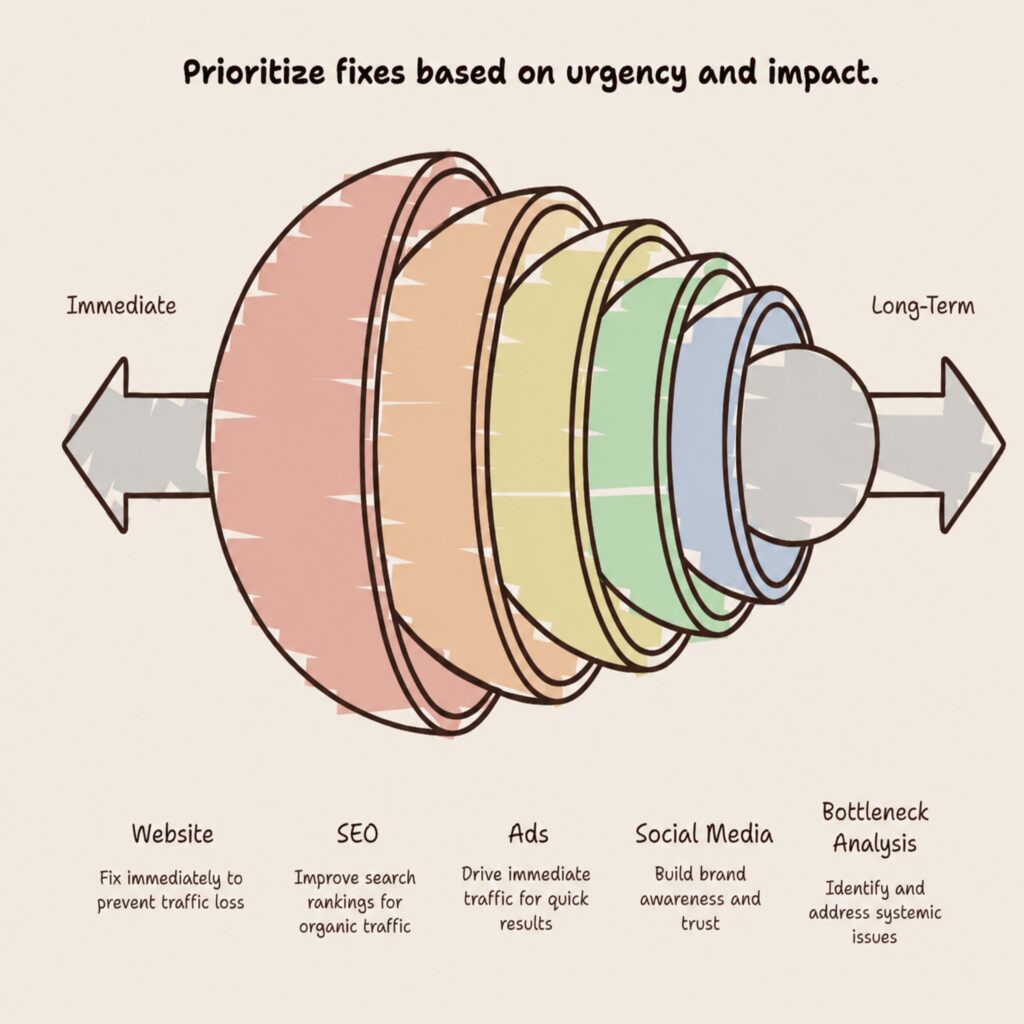
Here’s roughly how I’d think about it. If your website’s broken, fix that before anything else don’t keep sending traffic to something that doesn’t work. If the website’s fine but nobody’s finding you, that’s an SEO problem. If you need traffic fast and your site is ready to convert, that’s when ads make sense. If your brand just doesn’t have enough visibility or trust yet, put the effort into social.
And if everything seems to be running fine but growth has still stalled that’s usually not a single-channel problem. Maybe the ads are bringing in leads, but the sales team isn’t following up fast enough. Maybe SEO traffic is strong, but the website isn’t converting it. Maybe social media gets plenty of likes, but none of it’s designed to actually generate an enquiry.
That’s the trap of looking at each channel separately it hides the real problem. A better question than “SEO or ads?” is simply: where’s my biggest bottleneck right now?
For a lot of businesses, a reasonable order looks like this: website, then conversion, then SEO, then paid ads, then social, then ongoing optimisation. But it’s not a rule you follow blindly. A new business with a great site but zero visibility might jump straight to Google Ads. A local business with obvious search demand might go all-in on local SEO first. A visually-driven consumer brand might get more mileage from social and Meta Ads early on than from SEO.
What matters is your audience, your industry, your competition, your budget, and your actual goals not whichever channel happens to be trending this month.
Stop Spending Before You Know What's Actually Broken
One of the most common mistakes I see is businesses trying to solve a strategy problem by throwing more money at it. More ad spend doesn’t fix a weak offer. More social posts don’t fix bad positioning. More SEO content doesn’t fix a website that doesn’t convert. And a brand-new website, on its own, won’t generate a single customer without traffic and a real plan to bring people in.
Before you spend another rupee, take an honest look at your numbers website conversion rate, organic traffic, keyword rankings, cost per lead, lead quality, ad performance, social engagement, and how many of those leads actually become paying customers. That’s what tells you where the money should actually go next.
There’s genuinely no single right answer here. It depends on where your business is losing opportunities today. Your website is the foundation everything else stands on. SEO helps the right people find you without paying for it. Ads capture demand that already exists, right now. Social media builds the trust that gets people to eventually say yes. None of them work in isolation — the goal is getting them to work together.
If you’re still not sure whether your website is helping you generate leads or quietly sending potential customers away, that’s exactly the kind of thing worth figuring out before you spend more on marketing. Book a free consultation with Digital Hike, and we’ll look at your website, understand your offer, audience, and goals, and tell you honestly what could be stopping visitors from converting into leads. Call us at 9187138887 / 9632811130 or visit https://thedigitalhike.com/ to get started.