
THE ALGORITHM HATES YOUR CONTENT. HERE'S WHY!
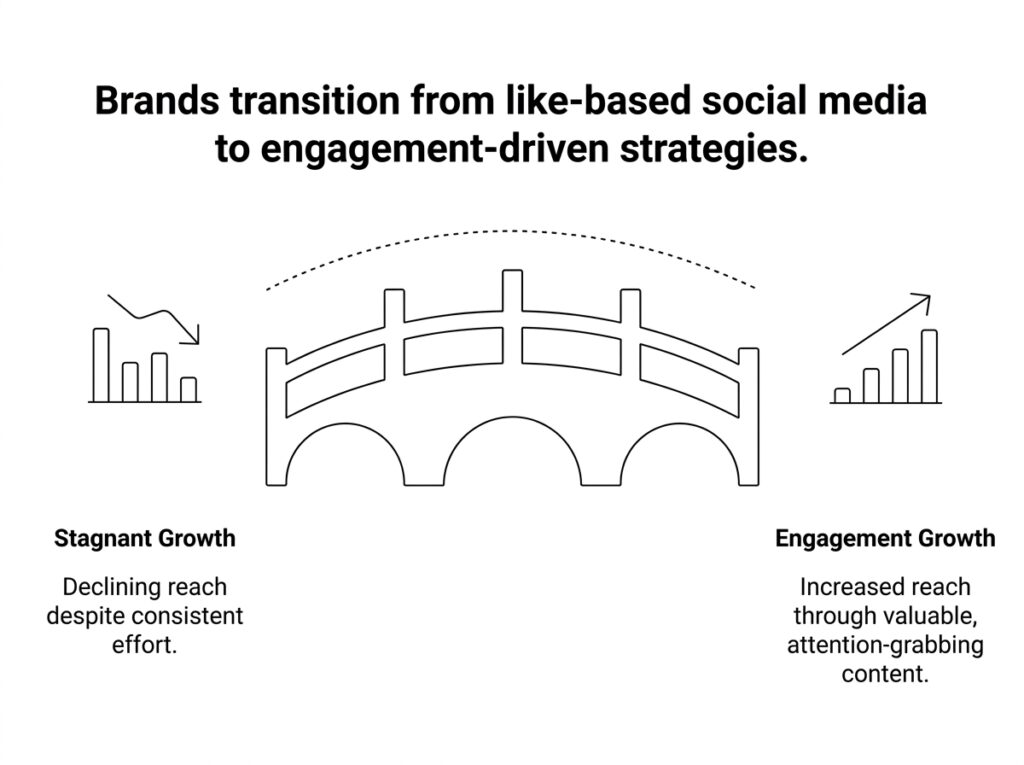
Somewhere in the last year, a lot of brand pages quietly stopped growing. Same posting frequency. Same design quality. Same captions that used to work fine. And yet the reach numbers keep sliding, month after month, with no obvious explanation. It’s tempting to blame the algorithm for being unfair. It’s more accurate to say the algorithm changed the assignment, and most brands are still turning in the old homework.
THE METRIC THAT ACTUALLY MATTERS NOW
For years, likes were the currency of social media. Post something people liked, get more reach, repeat. That model is largely gone. Instagram and other platforms have shifted heavily toward optimizing for watch time, saves, shares, and genuine conversation in the comments — signals that a piece of content held someone’s attention or was valuable enough to act on, rather than signals that it was simply pleasant to glance at.
This is a meaningfully different game. A post can rack up hundreds of likes and still get buried by the algorithm if nobody watched it past the first two seconds or bothered to save it. Meanwhile, a rougher-looking post that holds attention for the full duration and gets saved by a fraction of viewers can outperform it by a wide margin. Brands still designing for the like are optimizing for a metric the algorithm barely weighs anymore.
WHY POLISHED CONTENT IS FAILING
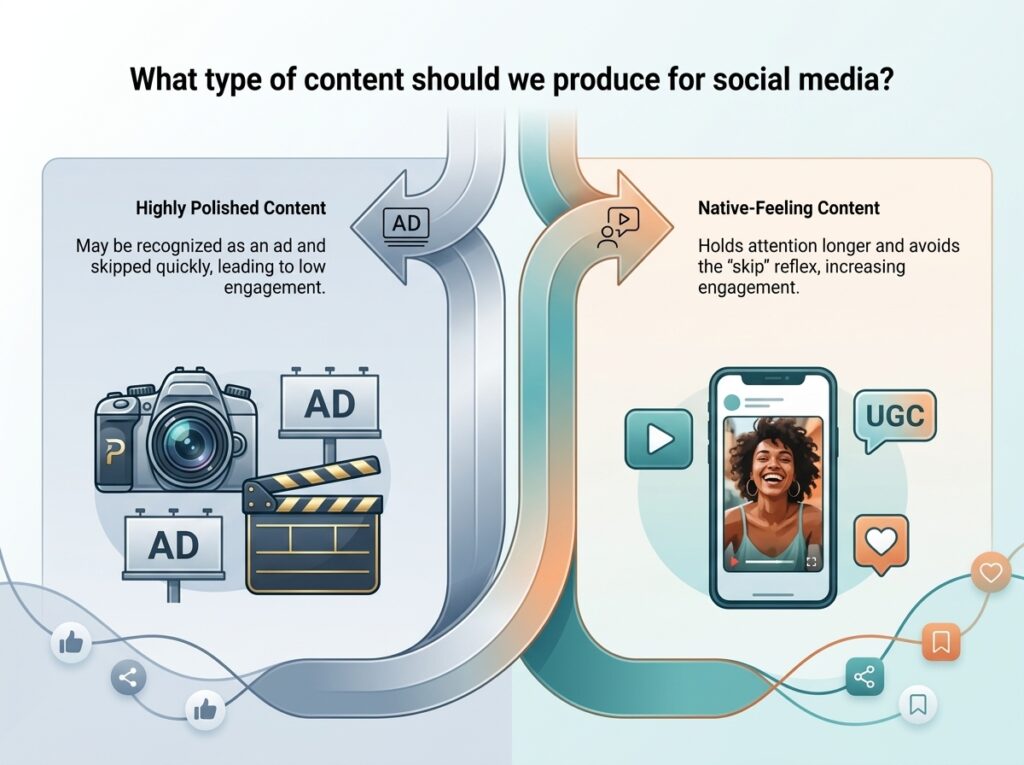
This is the part that catches a lot of brands off guard. Heavily produced, highly polished content — the kind that looks like a traditional advertisement — is increasingly getting outperformed by rougher, more native-feeling content that doesn’t look like it’s trying to sell anything. It’s not that quality stopped mattering. It’s that audiences have become extremely fast at recognizing “this is an ad” and scrolling past it within a second, before the algorithm even gets a meaningful watch-time signal to work with.
Content that feels native to the platform — shot handheld, narrated conversationally, structured like something a creator would post rather than something a brand would broadcast — tends to hold attention longer simply because it doesn’t trigger that instant “skip” reflex. That extra half-second of attention is often the entire difference between a video the algorithm buries and one it pushes to a wider audience.
THE REAL REASONS REACH IS DROPPING
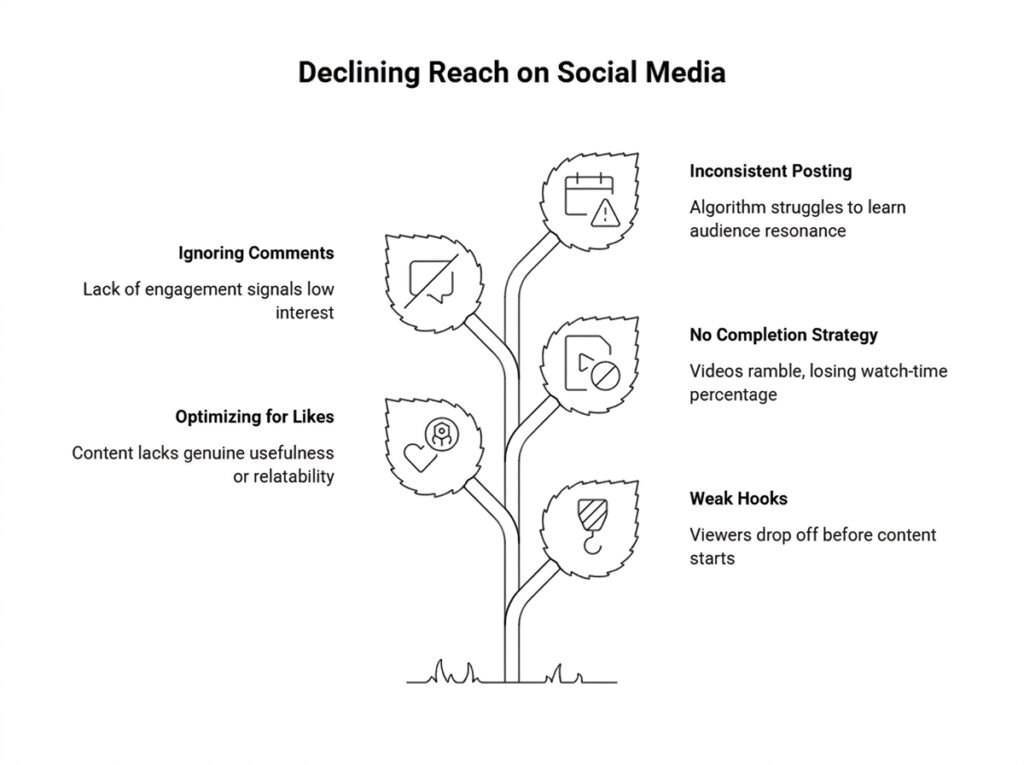
- Weak hooks. The algorithm is watching whether people drop off in the first one to two seconds. A slow intro, a logo animation, or a generic opening line is often enough to lose the viewer before the content even begins.
- Optimizing for likes instead of saves and shares. Content designed to look nice gets liked. Content designed to be genuinely useful or relatable gets saved and shared — and those two signals carry far more algorithmic weight.
- Posting without a completion strategy. Videos that ramble without a clear structure lose watch-time percentage, one of the strongest ranking signals on the platform right now.
- Ignoring comments. Genuine back-and-forth conversation in the comments signals real engagement to the algorithm. Posting and disappearing, without replying to a single comment, quietly suppresses future reach.
- Inconsistent posting without a content system. Sporadic posting makes it harder for the algorithm to learn who your content resonates with, which slows the efficiency of its distribution even when a post is genuinely strong.
WHAT ACTUALLY WORKS RIGHT NOW
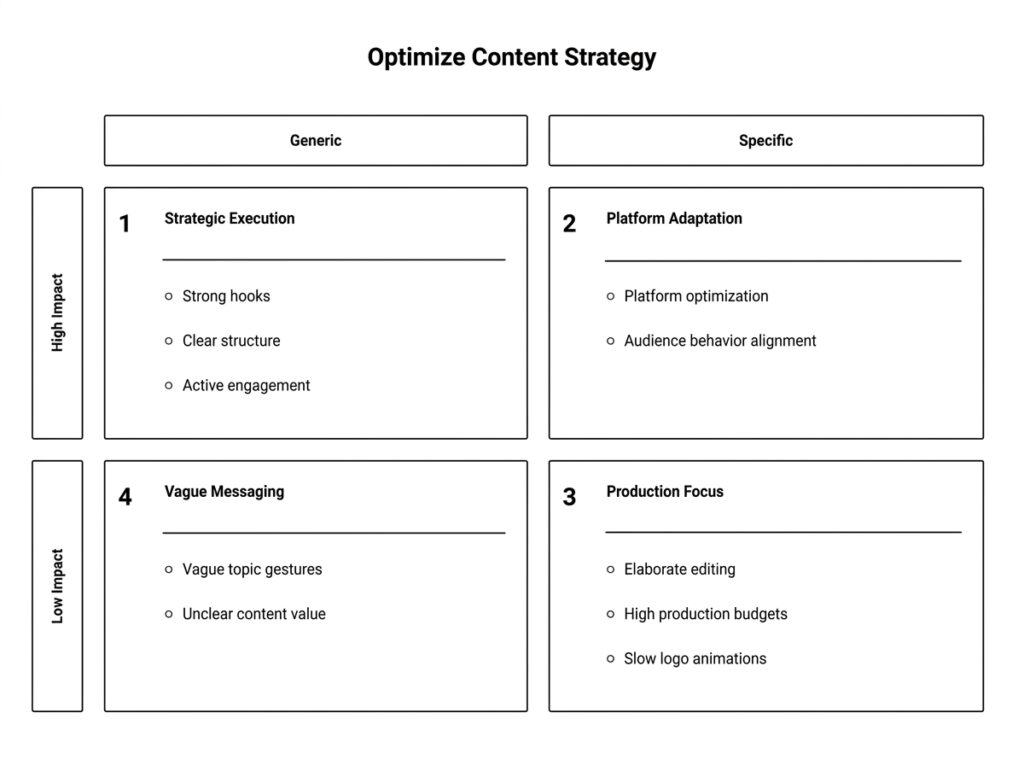
The brands still growing haven’t found some secret algorithm trick. They’ve simply adapted to what the platform is actually rewarding. That starts with the hook — the first one to two seconds need to promise a specific, concrete payoff, not a vague gesture at a topic. “3 mistakes killing your ad account” earns more attention than “let’s talk about ads today,” because it’s specific enough to make someone curious about what comes next.
It continues with a structure built for completion, not decoration — a clear opening, a middle that delivers on the hook’s promise, and a close that gives the viewer a reason to save or share, whether that’s a genuinely useful tip, a surprising fact, or a resource worth revisiting later. And it means treating comments as part of the content strategy, not an afterthought — replying quickly and genuinely, because that back-and-forth is itself a ranking signal, not just good customer service.
WHERE MOST BRANDS GO WRONG
The common mistake isn’t a lack of effort. It’s applying more effort to the wrong layer of the problem. Brands respond to falling reach by investing in better production — sharper cameras, more elaborate editing, bigger budgets — when the actual fix is usually about structure and hook strength, which cost nothing extra to fix. A phone-shot video with a strong first two seconds and a clear payoff will consistently outperform a beautifully produced video that opens with a slow logo animation, because the algorithm never gets to the beautiful part if the viewer leaves before it starts. There’s also a tendency to treat every platform the same way, repurposing one piece of content identically across Instagram, YouTube, and LinkedIn. Each platform’s algorithm is optimizing for slightly different signals and slightly different audience behaviour, and content that ignores those differences performs worse on all three than content built with even minor adjustments for each one.
THE BIGGER SHIFT UNDERNEATH ALL THIS
What’s really happening is that social platforms are getting better at identifying genuine value versus polished noise, and the algorithm is simply the mechanism that rewards the difference. A brand chasing likes, and production value is optimizing for how the content looks. A brand chasing watch time, saves, and genuine comments is optimizing for how content actually performs — and those two goals have quietly stopped being the same thing.
This isn’t really a story about the algorithm being unfair. It’s a story about a metric shift that most brands haven’t caught up to yet, which is exactly why the ones who do catch up tend to pull ahead so quickly — the competition, for the moment, is still designing for a scoreboard that no longer exists.
Digital Hike’s social media team builds content strategy around what platforms are actually rewarding right now, not what used to work two years ago. If your reach has quietly stalled and you’re not sure why, book a free strategy call and let’s take a real look at what’s happening.
One last thing worth sitting with: algorithms change on their own schedule, not on a brand’s content calendar. There will be another shift after this one, and probably another after that. The brands that stay ahead aren’t the ones who perfectly cracked this particular version of the algorithm — they’re the ones who built the habit of testing, watching the data, and adjusting quickly, instead of clinging to whatever worked last year. That habit, more than any single tactic in this piece, is the actual long-term advantage.