Your Competitor May Be Winning Search Without Ranking #1
For years, the #1 position on Google has been treated as the finish line for SEO. The top spot usually meant more visibility, more clicks, more traffic and, with luck, more customers.
But a business can rank well and still lose potential customers to a competitor with stronger overall search visibility. Search behaviour has shifted, and that gap is showing up more often.
Someone looking for a product or service may not use Google the way they did a few years ago. AI Overviews, AI Mode, conversational searches and visual search are changing how people find websites. Google says AI Overviews now have more than 2.5 billion monthly active users, and AI Mode has passed one billion monthly users globally. Google is also adding more links and website previews to its AI search experiences so people can reach original sources.
So what if your competitor is getting discovered even when they aren’t ranking #1 for the keyword you’re targeting?
Search Visibility Is Bigger Than Rankings
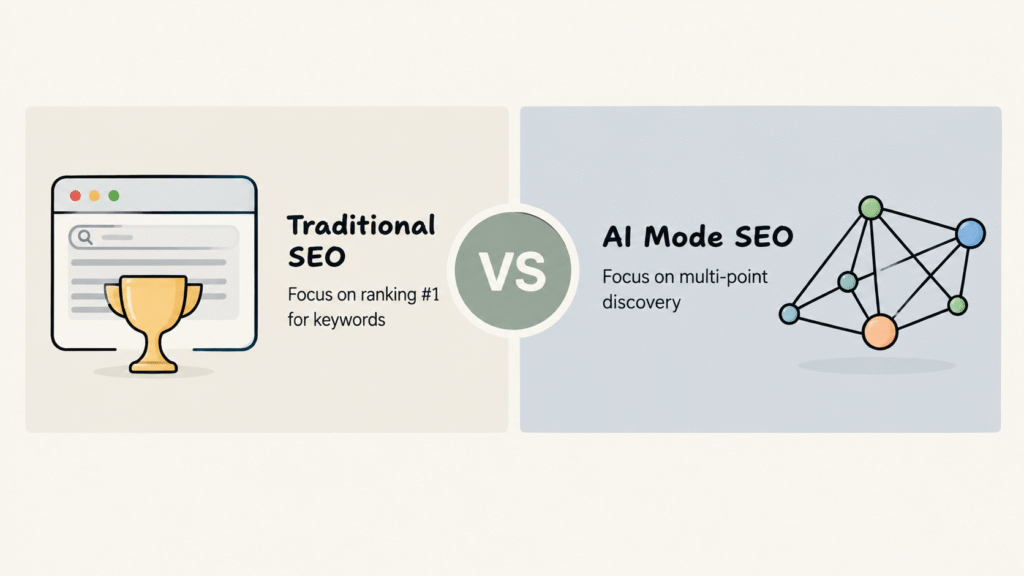
Traditional SEO has usually revolved around one goal: outrank competitors for your important keywords. Search journeys are messier than that. A potential customer might search a broad question, read an AI-generated overview, ask a follow-up, compare a few businesses, check reviews, visit a website and return to Google with a more specific query before deciding.
AI Mode can handle complex, conversational questions and run multiple searches, so a business can show up at several points along the way without holding the #1 organic position.
Picture two companies competing for the same customer. Company A ranks #1 for one major keyword. Company B ranks #3, but it also appears for dozens of related questions, publishes useful content, gets mentioned across the web, has strong reviews, and is referenced or linked within AI-powered search. Which has more chances to be discovered? You can’t tell from a single keyword position.
That’s why the better question is “How often, and where, am I being discovered?” rather than just “Where do I rank?” Ranking still matters. It’s one piece of a bigger visibility picture.
How AI Search Changes Discovery
AI-powered search is the biggest shift behind this. AI Mode can also provide links for people who want to go deeper, so optimising one page around one keyword may not be enough.
Compare two searches: “What should I look for when choosing a digital marketing agency for a growing business?” and “digital marketing agency near me.” The first is research and consideration. The second carries stronger commercial intent. A business that covers the questions, comparisons and concerns around its service has more chances to join that research phase, well before the customer is ready to buy.
Being Useful Can Beat Being First
None of this means you should stop caring about Google rankings. Google’s recent AI search updates emphasise connecting users with relevant websites, original content and useful sources, with additional links and website previews inside AI responses.
A competitor might outrank you for a broad keyword and still have weaker content around the questions customers actually ask. Another might have fewer top-three rankings but a far stronger mix of guides, service pages, comparison content, case studies, FAQs, reviews and industry expertise.
What the Competition Looks Like Now
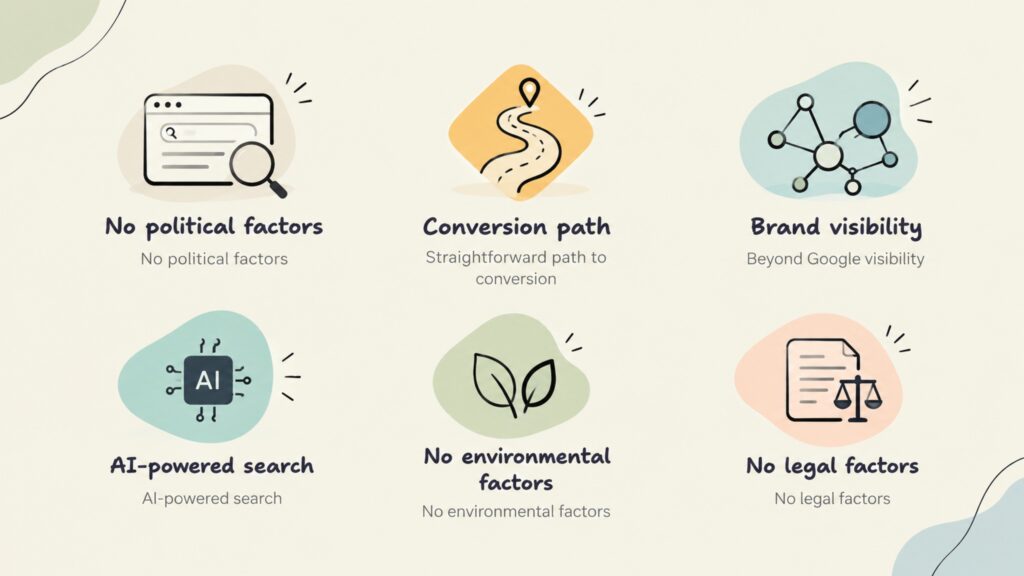
Modern SEO isn’t only a contest over keywords. You’re competing for attention, relevance and trust across a fragmented search journey.
Topic coverage: Rather than writing one article per keyword, build content around the full set of questions your audience has.
Search intent: Work out whether someone is researching, comparing, evaluating or ready to buy, and match the content to that stage.
Original information: Generic content is easy to copy. Real experience, data, examples and evidence-backed opinions give your content more value.
Website foundations: Content can’t make up for a slow, confusing or hard-to-navigate site. You still need clear service pages, strong internal linking and a straightforward path to conversion.
Brand visibility beyond Google: People also find businesses through social media, YouTube, reviews, industry publications, communities and AI-powered search. Those channels should work together.
Stop Measuring SEO With One Number
Reducing SEO performance to a single ranking position is one of the easiest mistakes to make. Instead of asking only “Are we #1?”, ask whether you’re appearing when potential customers are researching, comparing and deciding.
A fuller view includes organic impressions, relevant organic traffic, search visibility across topics, branded searches, qualified leads, conversion rates, content performance, assisted conversions, and AI search visibility where it can be measured.
Google is introducing Search Console insights on appearances in generative AI search features, including which pages appear in AI responses and the countries where they appear. Google says these insights have been rolled out globally as of August 31, 2026.
What to Do Next
You don’t need to abandon traditional SEO. You need to widen the strategy. Start by identifying the questions your customers ask before they’ve ever searched for your brand, then answer them clearly with useful content. Build strong service pages, improve the website experience and tighten internal linking. Base content on real expertise, not word count, and build credibility across the channels your audience uses. Then connect SEO with the rest of your digital marketing strategy.
The goal isn’t just to rank first. It’s to be the brand people find, trust and choose along the way. Your competitor may not be ahead because they rank #1. They may simply be visible in more of the moments that matter.
Talk to The Digital Hike
Not sure how visible your business is beyond a single ranking? The Digital Hike can help. Our team will review your current search visibility, look at the questions your customers ask, and show you where competitors may be appearing ahead of you. From there, we’ll help you build an SEO strategy that supports your business goals. Get in touch to start the conversation.
Frequently Asked Questions
Is ranking #1 on Google still important?
Yes. Organic rankings remain a key part of search visibility, but results now include more AI-powered and conversational experiences, so judge visibility beyond a single position.
Can a website get customers without ranking #1?
Yes. Customers find businesses through branded searches, maps, reviews, social platforms, referrals, content and AI-powered search. A high ranking helps, but it isn’t the only route.
What is AI search visibility?
How often and how prominently a brand or its content appears in AI-powered search, including the sources and links shown alongside AI-generated responses.
How can businesses improve their visibility in AI search?
Start with the basics: useful, original content, clear answers to customer questions, a technically sound website and a credible presence across relevant channels. Google says its AI search is designed to help users discover websites and original content.
Should businesses stop focusing on keywords?
No. Keywords and search intent still show how people search. The change is that no single keyword ranking should be your only measure of SEO success.
What should businesses measure instead of rankings?
Track impressions, relevant organic traffic, conversions, qualified leads, branded searches and content performance, plus any AI visibility insights search platforms provide.