
Top Meta and Google updates in March 2026
Three algorithm updates. And a whole lot of marketers are refreshing Google Analytics as it owes them money.
If your traffic dipped, your ad costs spiked, or your once-reliable content strategy suddenly feels like it’s held together with duct tape, you’re not imagining things. March 2026 was one of the most chaotic stretches in recent search and social media history, and honestly? Most brands are still catching up to what actually happened.
Let’s break it down; no fluff, no jargon overload, just what changed and what you need to do about it.
Google Went on a Rampage (And It Wasn't Even Done Yet)
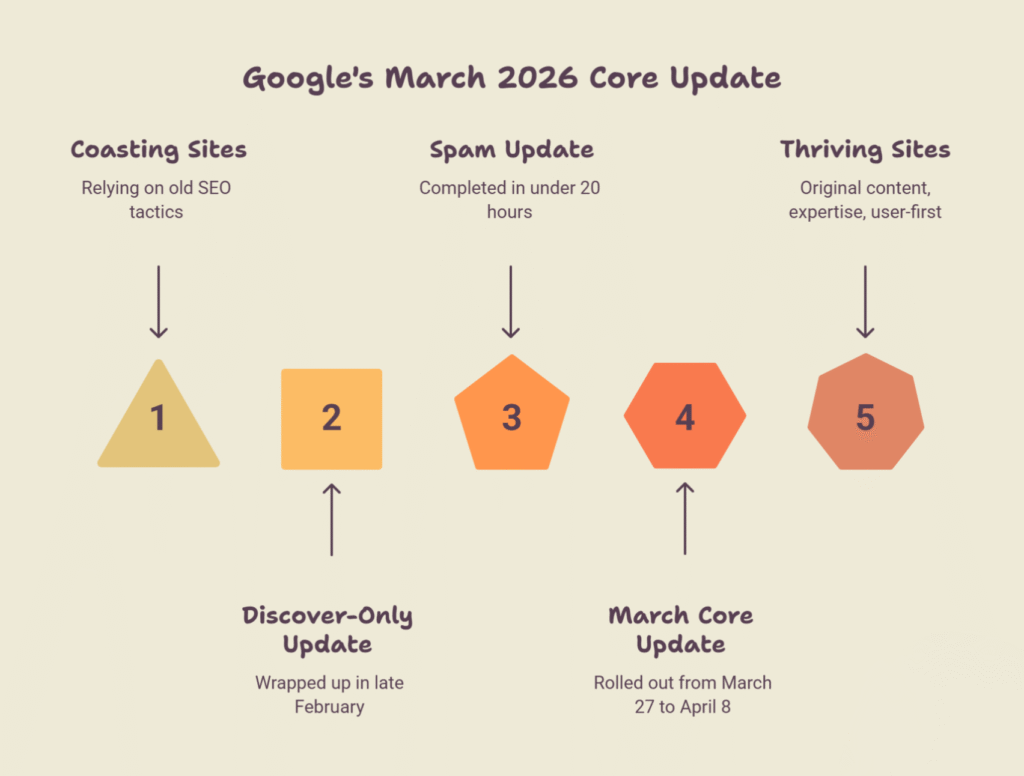
Google didn’t just push one update in March. It pushed three in roughly five weeks — a Discover-only core update that wrapped up in late February, a spam update that completed in under 20 hours (the fastest in Google’s history, by the way), and then the big one: the March 2026 core update, which rolled out from March 27 to April 8.
Here’s where it gets wild. Compared to the December 2025 core update, volatility went through the roof. Nearly 80% of top-three search rankings shifted positions, and almost a quarter of previously top-10 pages fell completely out of the top 100. That’s not a minor reshuffle — that’s Google pulling the rug out from under sites that were coasting.
So what actually separated the winners from the losers? It wasn’t backlinks. It wasn’t keyword density. Sites that survived — and even thrived — shared a few things in common: genuinely original content, authors with real, demonstrated expertise, and a user-first structure instead of a keyword-stuffed formula. Meanwhile, the sites getting crushed were the ones leaning hard on mass-produced AI content with zero editorial oversight, thin location pages that just swap out city names, and link profiles built from directories nobody trusts.
Local service businesses got hit especially hard. Home services, legal, and healthcare websites saw some of the biggest swings, and with more than half of all searches now ending without a single click, your Google Business Profile might matter more than your actual website right now. Fresh photos, active reviews, and a complete listing aren’t optional extras anymore — they’re survival gear.
Oh, and Google quietly folded Core Web Vitals into a single composite score. No more skating by on a decent LCP while your CLS is a disaster. Now it’s all evaluated together, and half-measures get punished.
Meta Rewired Its Entire Ad Engine Mid-Quarter
While Google was busy reshuffling the SERPs, Meta was doing something arguably more disruptive on the ads side. Early in March, Meta shifted its AI delivery system away from auction-based placement optimization toward outcome-based optimization, meaning the algorithm now tries to predict actual downstream conversions instead of just optimizing for clicks or landing page views.
Sounds smart in theory. In practice? Advertisers who were still optimizing campaigns for clicks got absolutely hammered. CPMs jumped anywhere from 15% to 40% in the first two weeks alone, hitting consumer goods and financial services campaigns the hardest. If your ad costs mysteriously spiked and your team couldn’t figure out why, this is very likely your answer.
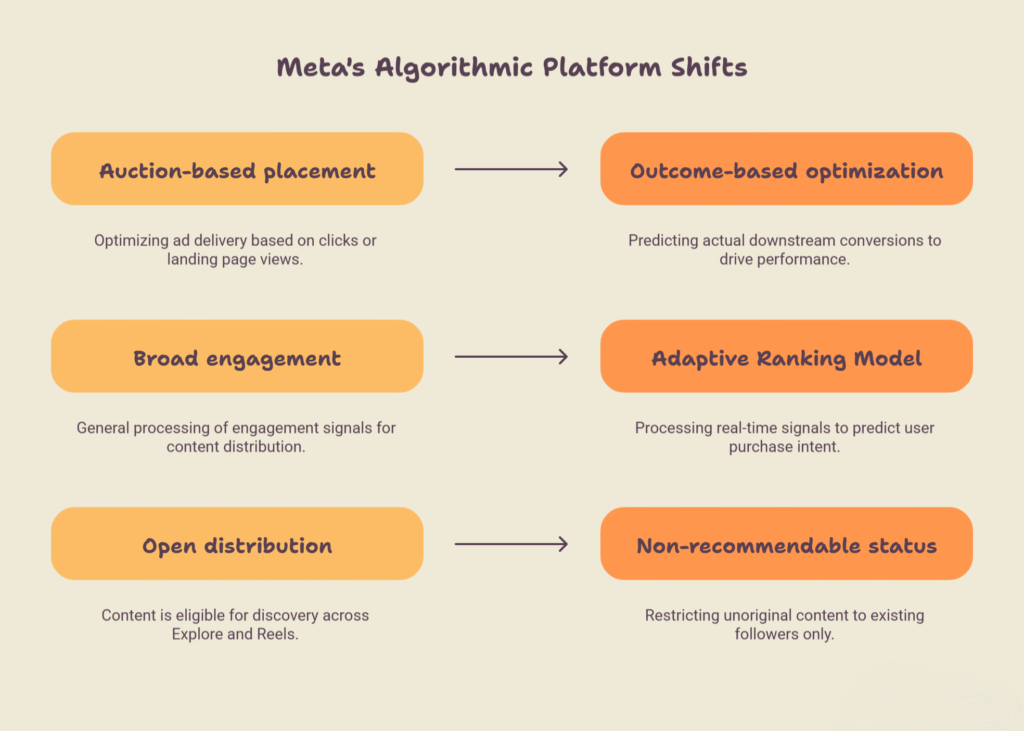
Instagram also rolled out a new Adaptive Ranking Model for ad serving toward the end of the month, designed to process real-time engagement signals more efficiently. Translation: the platform is getting sharper at figuring out what you actually want to see — and what you’ll actually buy.
Then there’s the creator side. Meta tightened its originality rules across both Facebook and Instagram, and the consequences aren’t subtle. Accounts flagged for unoriginal or recycled content can be marked “non-recommendable,” meaning Meta’s algorithm simply stops showing that content to anyone who doesn’t already follow the account. No Explore page, no Reels discovery, no organic growth. For creators and brands relying on reach, that’s essentially a soft ban.
So What Do You Actually Do About All This?
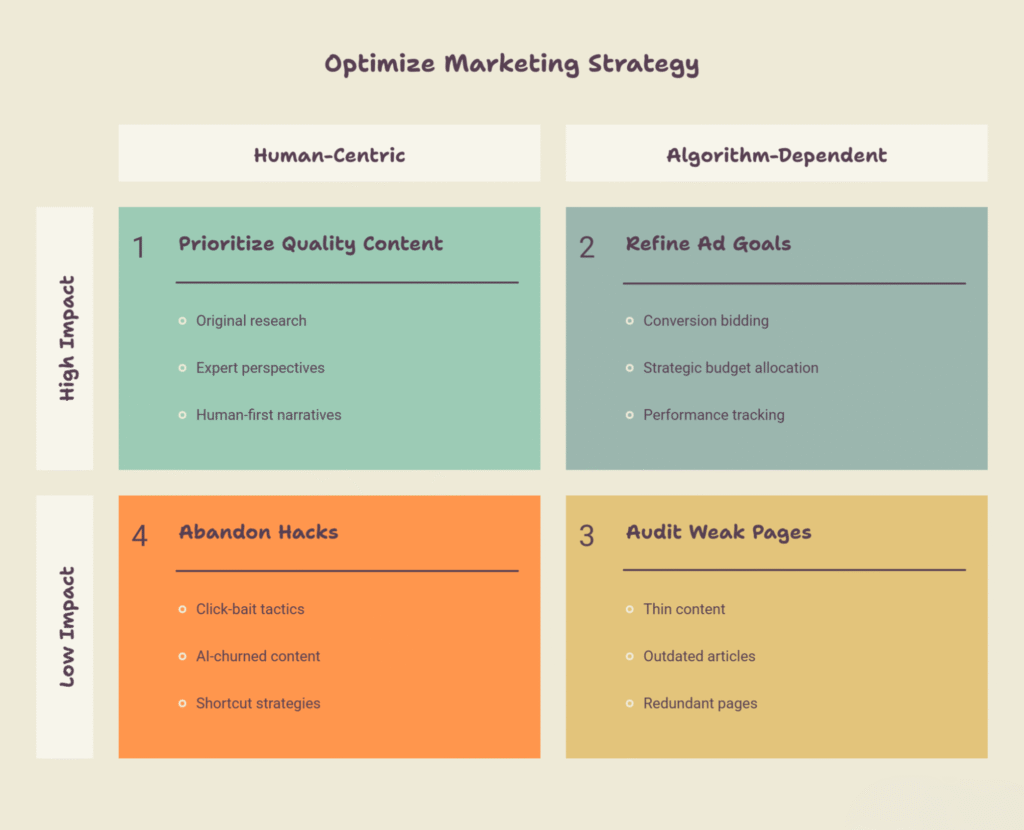
Stop chasing algorithm hacks. Genuinely. Both platforms sent the same underlying message in March, just through different channels: original, expert-backed, human-first content wins, and shortcuts get punished faster than ever.
If you’re running a website, audit your weakest pages now — the thin ones, the AI-churned ones, the ones with no real point of view — and either rebuild them properly or cut them loose. If you’re running ads, revisit your optimization goals immediately; if you’re still bidding for clicks in a conversion-first algorithm, you’re burning budget.
March 2026 wasn’t a glitch. It was a preview of where digital marketing is headed for the rest of the year — and the brands paying attention now will be the ones still standing when the next update lands.
The digital marketing landscape is evolving faster than ever. Every Google update, Meta algorithm change, and AI advancement is reshaping how businesses attract customers online. The brands that succeed won’t be the ones chasing every trend—they’ll be the ones building a strong digital foundation with the right strategy, quality content, and continuous optimization.
At Digital Hike, we help businesses stay ahead with data-driven SEO, performance marketing, website development, branding, and content strategies designed for long-term growth, not short-term hacks. As platforms evolve, so do we, ensuring your business remains visible, competitive, and ready for what’s next.
Ready to future-proof your digital presence?
🌐 Website: www.thedigitalhike.com
📞 Call: +91 91871 38887
📧 Email: hi@thedigitalhike.com