


Google Ads vs Meta Ads: Which One Actually Deserves Your Budget?
Picture two salespeople standing at opposite ends of a mall. One walks straight up to shoppers who are already holding a list, actively looking for exactly what you sell, and says, “Here’s what you need.” The other mingles in the food court, chatting people up, showing them something they didn’t know they wanted, hoping to spark interest before they’ve even thought about buying anything.
That’s roughly the difference between Google Ads and Meta Ads. One captures existing intent. The other creates it. And the businesses that struggle with paid advertising are almost always the ones using one platform the way the other is supposed to work.
Two Completely Different Games
Google Ads lives inside a search bar, which means it’s dealing with people who already know what they want. Someone typing “best waterproof hiking shoes under 5000” isn’t idly scrolling — they’re close to a decision, maybe minutes away from buying. Google’s entire ad model is built around catching that exact moment of intent and putting your product or service directly in front of it.
Meta Ads — Facebook and Instagram — work in a completely different headspace. Nobody opens Instagram thinking “I should buy hiking shoes today.” They’re there for reels, memes, and updates from friends. An ad has to interrupt that mindset and manufacture desire out of nothing, using a scroll-stopping visual or a hook that makes someone pause mid-scroll. It’s not answering a question. It’s planting one.
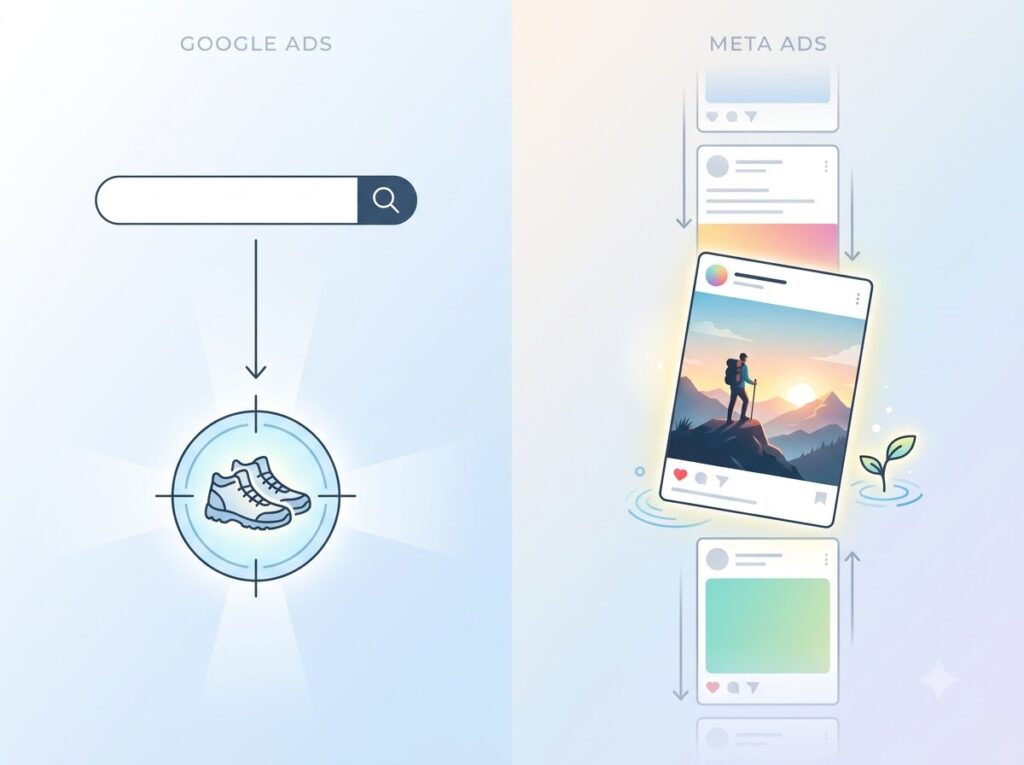
Neither approach is better in the abstract. They’re just built for different moments in the buying journey, and that’s exactly where most businesses go wrong — expecting one platform to behave like the other.
Where Google Ads Wins, Hands Down
If your product or service solves a problem people are already actively searching for, Google Ads is usually the faster path to revenue. Real estate buyers searching “3BHK flats in Whitefield,” someone searching “emergency plumber near me,” a business owner searching “CRM software for small teams” — these are all high-intent moments where a well-placed ad converts almost immediately, because the hard part of marketing, generating desire, has already happened inside the searcher’s head.
This is why service-based businesses, high-ticket purchases, and anything with a clear “problem, then solution” search pattern tend to see stronger, faster ROI from Google. The customer isn’t being convinced they need something. They already know. Google Ads just needs to make sure it’s your business they find first.
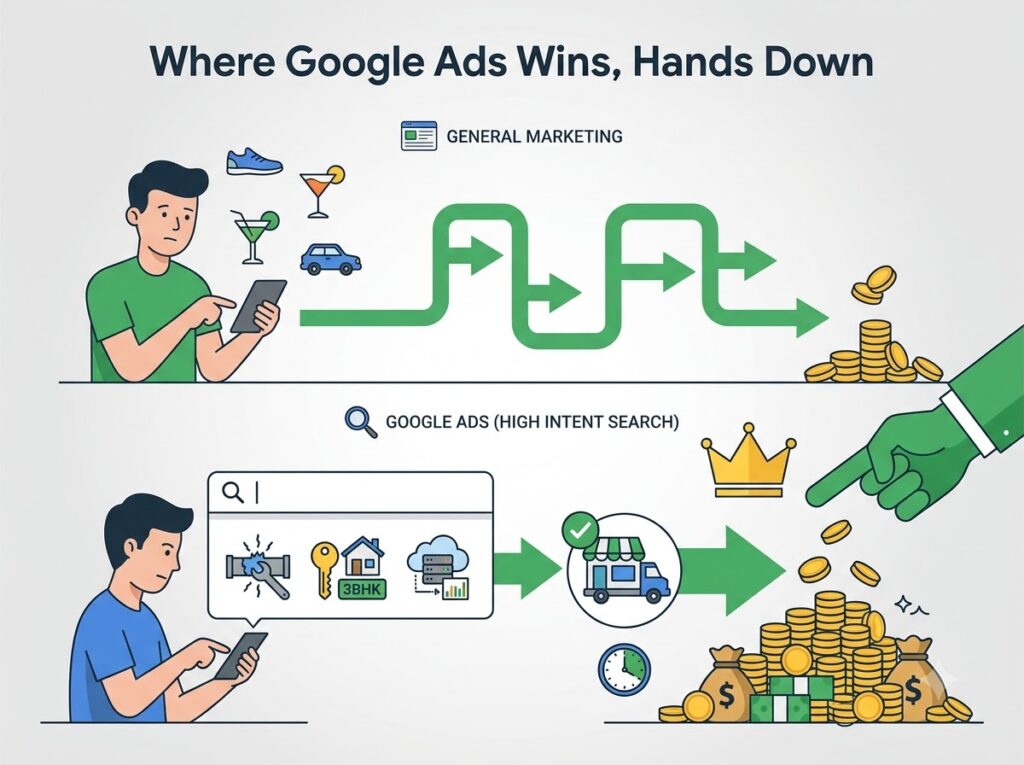
The catch is cost. High-intent keywords in competitive categories — insurance, legal services, real estate in metro cities — can get brutally expensive per click, and if the landing page or offer isn’t tight, that spend evaporates fast without converting.
Where Meta Ads Pull Ahead
Meta Ads make far more sense for products people don’t know they need yet, or for brands trying to build recognition rather than capture an already-existing search. A new D2C skincare brand, a trendy apparel label, a lifestyle product nobody’s specifically searching for by name — these thrive on Meta’s visual, scroll-based format, where a great video or striking image can generate desire out of thin air.
Meta also has an advantage Google can’t really match: audience targeting based on behavior, interests, and lookalike modeling. A brand can say “show this to people who behave like my existing best customers” and let Meta’s algorithm find similar people at scale. That kind of discovery-driven targeting is what makes Meta especially strong for top-of-funnel brand building and reaching audiences who’ve never heard of you but would genuinely love what you sell, if only they knew it existed.
The tradeoff here is that Meta traffic is colder. These are people who weren’t looking to buy, which means conversion rates are naturally lower. The funnel usually needs more steps — a scroll-stopping ad, a strong landing page, maybe a retargeting sequence — before someone actually pulls out their card.
The Metric Trap: CPC Isn't the Whole Story
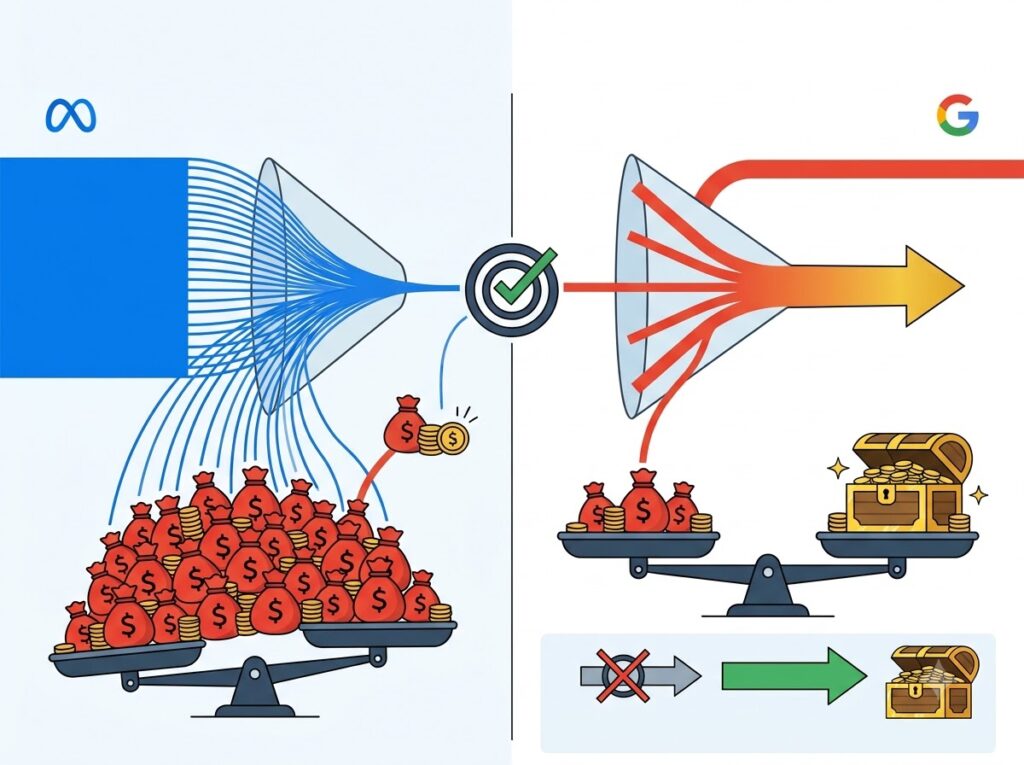
A lot of businesses compare these platforms purely on cost-per-click and declare a winner based on whichever number looks smaller. That’s a mistake. A cheap click that never converts is more expensive than an expensive click that does. Google clicks often cost more per click but convert at a much higher rate because of built-in intent. Meta clicks are usually cheaper but need more nurturing before they turn into revenue.
The number that actually matters is cost per acquisition — what it took, all in, to get one paying customer. And that number can only be judged properly by testing both platforms against your specific offer, not by trusting a generic benchmark from a blog post that has no idea what you’re actually selling.
Why This Shouldn't Be an Either-Or Decision
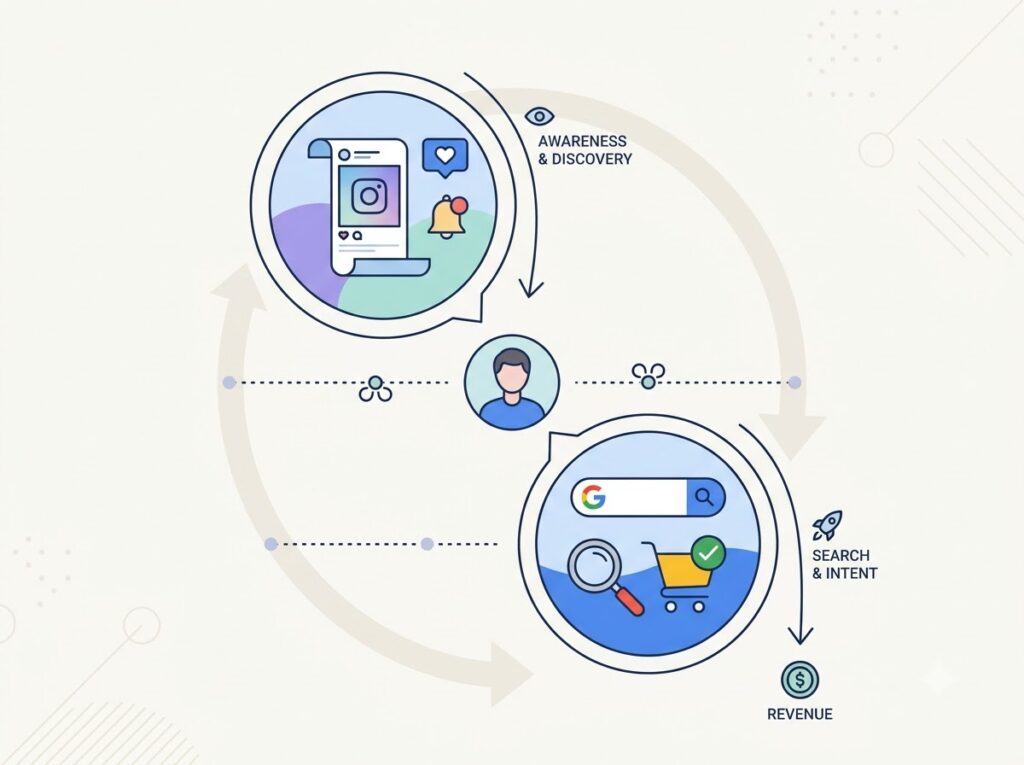
The businesses getting the most out of paid advertising rarely pick a side. They use Meta to build awareness and desire at the top of the funnel, then use Google to catch that same audience later, once they’ve started actively searching for the brand by name or researching the category more seriously. Someone might see a product on Instagram, not buy immediately, then a week later search for it on Google, ready to purchase — and if you’re not running Google Ads at that point, a competitor’s ad might catch that exact search instead.
This is also where retargeting becomes powerful across both platforms. Someone who clicked a Meta ad but didn’t buy can be shown a Google ad later when they search for a similar product. Someone who searched on Google but bounced can be brought back through a retargeting campaign on Instagram. The two platforms aren’t competitors for the same budget — they’re stages of the same customer journey, and treating them that way is what actually moves the needle on revenue.
So, Which One Should You Actually Choose?
If your business depends on people actively searching for what you offer — services, high-consideration purchases, anything with strong existing demand — start with Google Ads and use it as your primary engine. If you’re building a newer brand, launching a product people don’t yet know they need, or trying to create desire visually, Meta Ads should carry more of the initial weight. And once there’s enough data and budget to work with, running both in tandem, feeding each other through retargeting, is where the real compounding growth happens.
There’s no universal winner here, no matter how many blog posts claim otherwise. The right answer depends entirely on what you’re selling, who’s buying it, and where they are in their decision-making process when your ad shows up in front of them.
If you’re not sure which platform deserves more of your budget right now, that’s exactly the kind of thing worth figuring out before spending another rupee guessing. Book a free consultation with Digital Hike, and we’ll walk through your specific offer, audience, and goals to tell you honestly where your budget should actually be going. Call us at 9187138887 / 9632811130.