


Which Instagram Metric Actually Matters?
Open any Instagram analytics dashboard and you’ll find yourself staring at a wall of numbers — likes, reach, impressions, saves, shares, comments, follower growth, profile visits, story completion rate. It looks like a control panel for a spaceship. And somewhere in that overwhelming grid, most business owners quietly pick one number to obsess over, usually because it’s the biggest or the easiest to understand. Nine times out of ten, that number is likes.
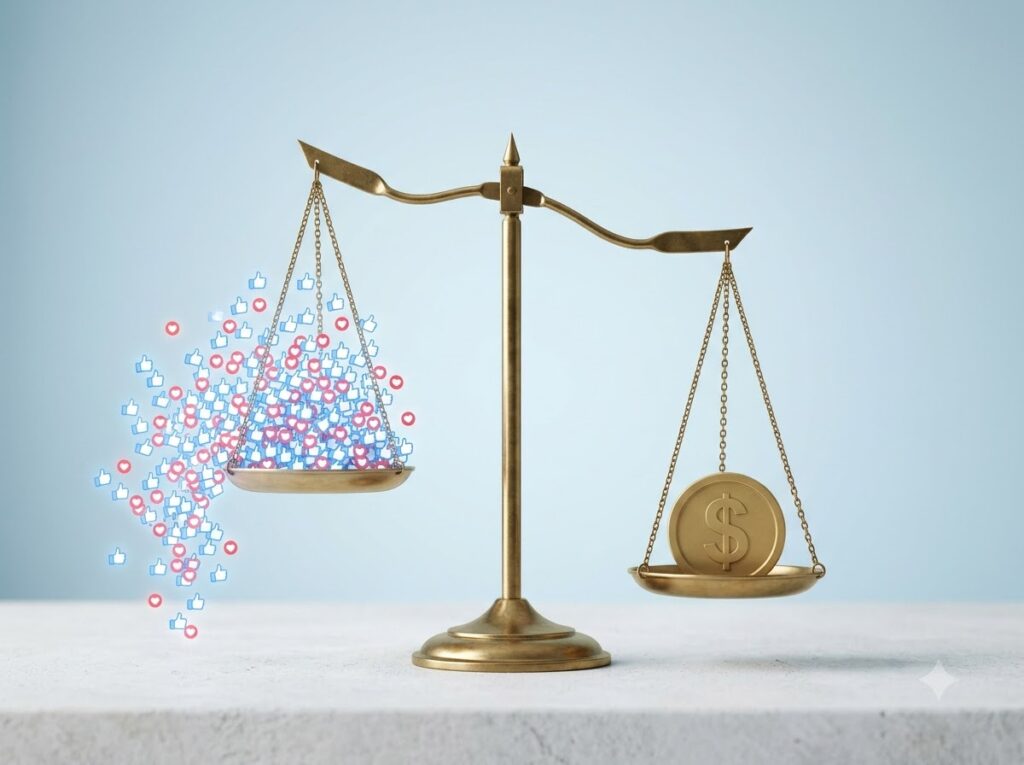
Here’s the uncomfortable truth: likes are probably the least useful metric on that entire screen for a business trying to actually grow. And chasing the wrong number, month after month, is how brands end up with a great-looking Instagram page and a business that isn’t growing nearly as fast as the “engagement” would suggest.
Why Likes Became the Default Obsession
Likes are the first metric anyone sees. They’re right there under the post, visible to everyone, and they’re the closest thing social media has to instant validation. A post that hits a few thousand likes feels like a win, and that feeling is exactly why so many brands optimize for it without asking a harder question: does this number actually correlate with anything a business cares about?
For most brands, the answer is no. Likes measure momentary approval, not intent. Someone can double-tap a well-shot photo purely because it’s aesthetically pleasing, without having the faintest interest in what’s being sold. A meme page and a jewelry brand can both rack up thousands of likes on a Tuesday, and only one of those numbers has anything to do with revenue.
So What Should You Actually Be Watching?
There isn’t a single universal answer, because the “most important metric” depends entirely on what stage a business is at and what it’s actually trying to achieve. But if there’s one metric that consistently tells a more honest story than likes, it’s saves.
Saves are quiet. Nobody sees them, there’s no social flex attached to saving a post, which is exactly what makes them so valuable — they’re a pure signal of genuine interest. A person doesn’t save a post to be polite or to support a friend. They save it because they intend to come back to it: to buy that product later, to try that recipe, to remember that service for when they actually need it.
For a business, saves are one of the closest things Instagram offers to a real intent signal. A high save rate on a product post often means people are bookmarking it for a future purchase decision, not just admiring it in passing. And Instagram’s own algorithm treats saves as a strong ranking signal too, which means content that gets saved tends to get shown to more people organically — a nice compounding effect that likes simply don’t offer.
Shares Deserve a Closer Look Too
Right behind saves, shares tell a story that likes never will. When someone shares a post to their story or sends it to a friend in DMs, they’re vouching for it in a way that costs them a little social capital. That’s a meaningfully bigger action than a passive double-tap, and it’s also how organic reach actually compounds — one share can introduce a brand to an entirely new pocket of an audience that no ad budget targeted.
A post with modest likes but a strong share count is often doing more for a brand’s actual growth than a viral post with huge likes and almost no shares. The viral post got attention. The shared post got word-of-mouth, which is a completely different and far more valuable currency.

Reach and Impressions: Useful, But Only Half the Story
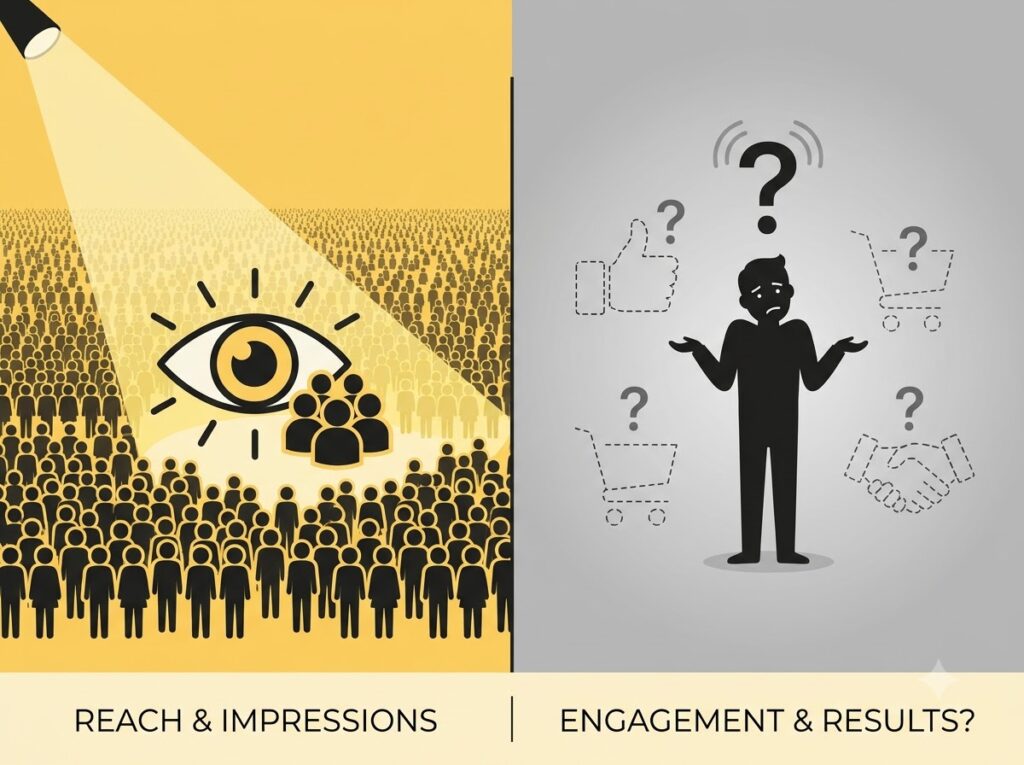
Reach and impressions get thrown around a lot in performance reports, and they’re not meaningless — they tell you how many people are actually seeing your content, which matters for brand awareness. But on their own, they say nothing about whether that visibility is translating into anything useful. A post can reach fifty thousand people and generate zero interest if the content isn’t landing with the right audience.
These metrics work best as context, not as the headline number. Reach tells you how big the room was. It doesn’t tell you whether anyone in that room actually cared about what you were saying.
The Metric That Ties It All Together: Profile Visits and Link Clicks
For businesses specifically trying to drive traffic or sales, there’s a metric that often gets buried under vanity numbers but matters enormously — profile visits and link clicks. This is the moment someone moves from passively consuming content to actively considering the brand enough to check out more or visit the website. It’s the bridge between content and commerce, and it’s usually a far better predictor of actual business impact than likes ever will be.
A content strategy that drives strong profile visits and link clicks, even with modest like counts, is doing its actual job. A strategy racking up huge like counts with almost no profile visits is essentially entertaining an audience without converting any of that attention into business value.
Why "It Depends" Is Actually the Right Answer
If a brand is purely focused on top-of-funnel awareness — getting a new audience to know it exists — reach and shares matter more. If it’s trying to build trust and future purchase intent, saves become the number to watch closely. If the goal is driving actual traffic and sales, profile visits and link clicks tell the real story. Likes, meanwhile, are rarely the right metric for any serious business goal — they’re just the most visible one, which is exactly why they get more attention than they deserve.
The mistake most brands make isn’t picking a “wrong” metric entirely — it’s picking one metric and using it for every stage of the funnel, when different content and different goals genuinely need different numbers to judge success.
Metrics Without Strategy Are Just Numbers
Here’s the part that gets lost in most conversations about Instagram analytics: no metric, no matter how well-chosen, fixes a strategy that isn’t built around a clear goal in the first place. Saves and shares are more honest signals than likes, but a brand still needs to know what it’s optimizing for — awareness, trust, or direct conversions — before any of these numbers become genuinely useful.
Chasing likes feels productive because the number is big and visible. Chasing saves, shares, and profile visits requires a bit more patience and a bit less ego, but it’s the version of Instagram growth that actually shows up in a business’s revenue, not just its screenshot-worthy analytics page.
If you’re not sure which metrics your business should actually be tracking, or your content is getting engagement without translating into leads or sales, that’s worth a proper conversation. Book a free consultation with Digital Hike, and we’ll break down exactly what your Instagram numbers are telling you — and what to do about it. Call us at 9187138887 / 9632811130.