


SEO vs Paid Ads: Where Should Your Marketing Budget Actually Go?
Every business with a marketing budget eventually runs into this exact debate. Someone in the room says “let’s just run more ads, we need sales now.” Someone else says “we should be investing in SEO, ads are a money pit long-term.” Both are right, and both are also missing half the picture. This isn’t actually an either-or decision — but treating it that way is one of the most expensive mistakes growing businesses make with their marketing spend.
The real question isn’t which one is better. It’s which one makes sense for where your business is right now, and how the two should actually work together instead of competing for the same budget line.
Why This Debate Even Exists
Paid ads and SEO solve different problems, but they get compared as if they’re interchangeable tools for the same job. Ads are fast — turn on a campaign today, get traffic today. SEO is slow — it can take months before rankings move meaningfully. Naturally, a business under pressure to show results this quarter leans toward ads, while a business thinking five years out leans toward SEO.
The mistake is picking one and abandoning the other entirely, based purely on this speed difference, without considering what each one is actually good at.
What Paid Ads Are Genuinely Good At
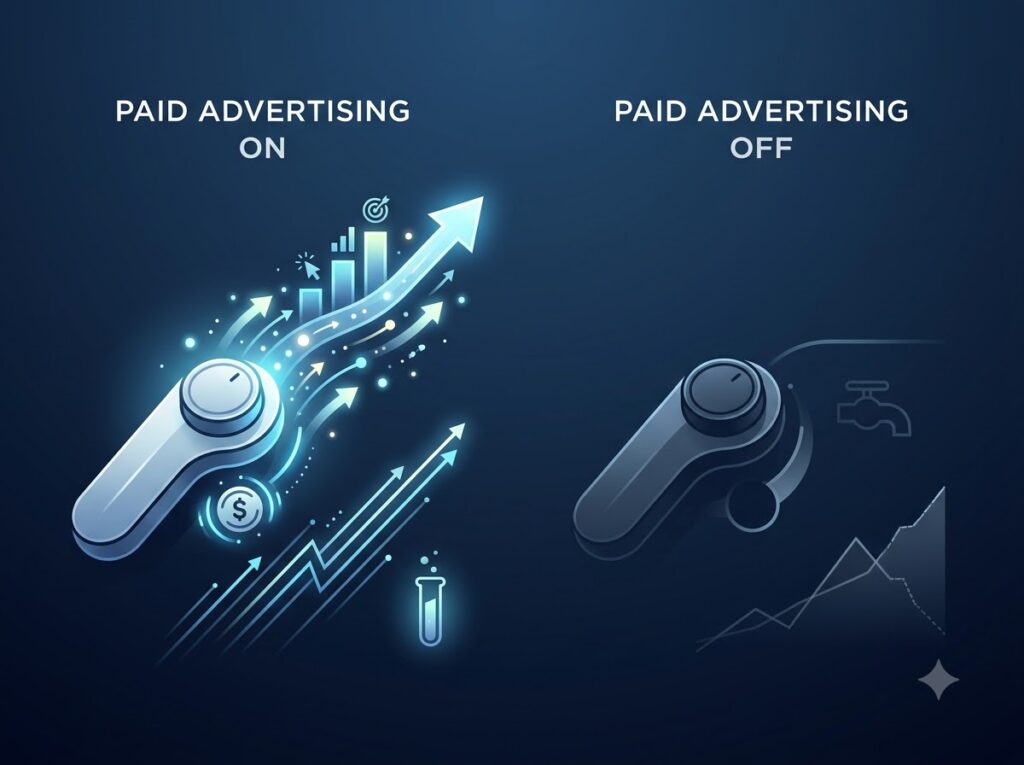
Paid advertising earns its reputation for a reason. It’s controllable, measurable, and immediate. You decide the audience, the budget, the message, and within hours you’re seeing clicks, and within days you’re seeing conversions. For a new product launch, a time-sensitive sale, or a business that needs revenue this month rather than this year, there’s no real substitute.
Ads are also excellent for testing. Before a business commits to a big brand message or a specific customer segment, running paid campaigns can validate what actually resonates — which headline gets clicks, which audience converts, which offer people respond to. That data is valuable well beyond the ad campaign itself; it informs everything from product positioning to organic content strategy.
The catch is that ads stop working the moment you stop paying. There’s no residual value sitting there once the budget runs out. Every rupee spent buys attention for exactly as long as the campaign runs, and not a day longer. For businesses that rely entirely on paid traffic, growth is directly tied to how much they can keep spending — which is a fragile place to build a business from.
What SEO Is Genuinely Good At
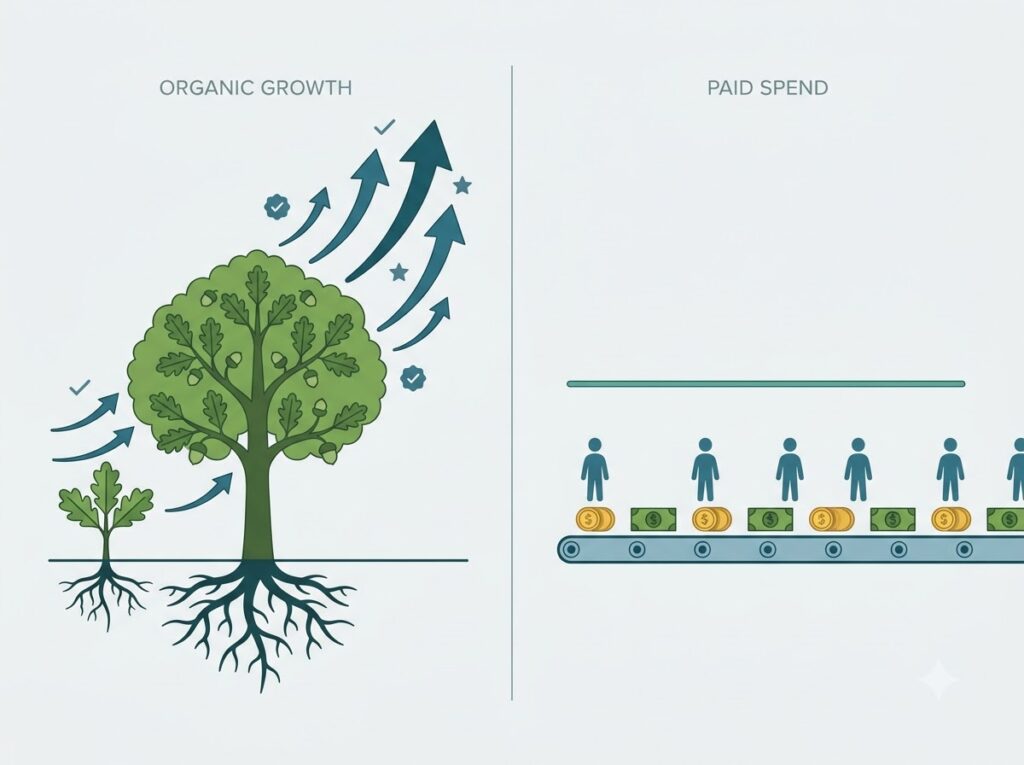
SEO plays the long game, and that’s precisely its strength. A well-optimized page ranking for a relevant search term keeps bringing in traffic for months or years without additional spend per click. Compare that to ads, where every single visitor costs money regardless of how many people came before them — SEO traffic essentially gets cheaper over time as the investment compounds.
There’s also a trust factor that paid ads simply don’t carry. Many users actively skip past sponsored results and click on organic listings instead, especially for research-heavy or high-consideration purchases like real estate, healthcare, or financial services. Ranking organically signals a kind of credibility that an ad, no matter how well designed, doesn’t automatically carry.
The downside is obvious too — SEO takes time, consistency, and patience. It’s not something you switch on for a weekend sale. A business expecting first-page rankings within a month is going to be disappointed, and this is exactly why businesses under short-term pressure often deprioritize it, even though ignoring it is a long-term cost.
The Real Answer: Sequencing, Not Choosing
The businesses that get the most out of their marketing budget don’t pick a side — they sequence the two strategically based on their stage of growth.
Early-stage businesses, or those launching something new, typically need paid ads first. There’s no existing audience, no search volume around a new product, nothing organic to rank for yet. Ads generate the initial traction, validate the offer, and bring in early customers while the brand builds enough of a digital footprint for SEO to even have something to work with.
As the business matures, the smart move is gradually shifting a portion of that ad budget into content and SEO — not eliminating ads, but reducing the dependency on them for baseline traffic. Over time, organic search should be handling a growing share of top-of-funnel visitors, while paid ads get redirected toward retargeting, high-intent keywords, and specific campaigns rather than carrying the entire load.
This is the sequencing most businesses get backward. They either overinvest in ads early and never build the organic foundation, staying permanently dependent on rising ad costs — or they invest heavily in SEO from day one while having no traffic at all to learn from, wasting months writing content nobody sees yet.
The Budget Split Nobody Talks About Enough
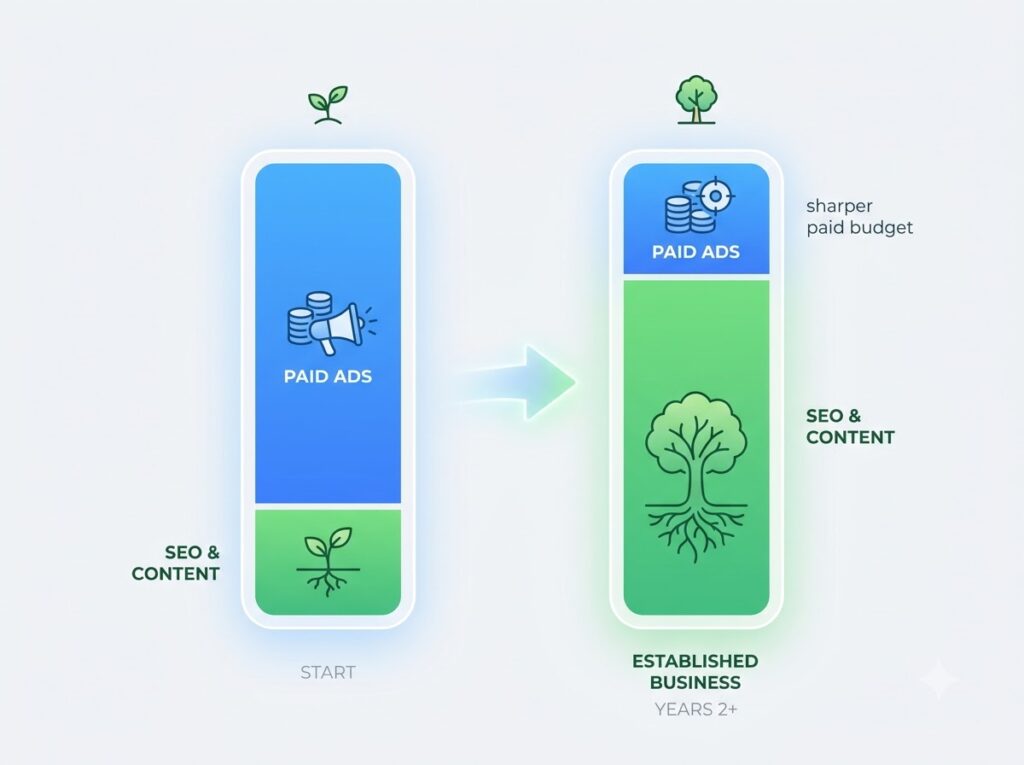
There isn’t a universal percentage that works for every business — an e-commerce brand competing in a crowded category has different needs than a B2B SaaS company with a long sales cycle. But the underlying principle holds across industries: the split should shift as the business grows, not stay fixed.
A brand-new business might reasonably put 80% of its budget into paid ads just to get moving. A business with two or three years of consistent content and a decent domain authority might flip that ratio, putting the majority into SEO and content while running a smaller, sharper paid budget focused purely on retargeting and high-converting keywords.
The mistake is treating this split as a one-time decision instead of something that gets revisited every few months based on what the data is actually showing.
Where Most Businesses Go Wrong
The businesses that struggle with this usually fall into one of two camps. Either they’re addicted to paid ads because the results are immediate and visible, never building the organic presence that would eventually lower their cost per acquisition — or they’re so focused on “playing the long game” with SEO that they starve the business of the short-term revenue it needs to survive long enough to see those results.
Neither extreme works well on its own. The businesses that grow sustainably are the ones treating paid ads and SEO as two arms of the same body, not two competing departments fighting over the same budget.
Bringing It Together
There’s no universally correct answer to how much should go into ads versus SEO — but there is a universally correct approach, and that’s building both in parallel with intention, adjusting the balance as the business grows rather than locking into one strategy out of habit or fear.
Paid ads buy you speed. SEO buys you compounding value. A business that understands the difference — and builds a strategy around using both at the right time — ends up spending less over the long run while building something that keeps generating traffic and trust long after the ad budget runs dry.