
GOING VIRAL KILLS D2C BRANDS!
Picture a D2C brand that most people in the industry would recognise as a pattern, even if the name changes every time. A founder launches a product. One Reel catches fire. Views hit a few million. Orders flood in overnight. Instagram followers triple in a week—every founder’s dream, playing out exactly on schedule. Eight months later, the brand is gone. Not dramatically — just quietly stopped posting, stopped restocking, and eventually stopped existing. This isn’t a rare story. It’s one of the most common failure patterns in Indian D2C right now, and it repeats itself often enough to be treated as a case study rather than bad luck.
THE MOMENT EVERYTHING LOOKED PERFECT
Virality feels like validation. The metrics all point the same direction — reach, followers, orders — and it’s easy to read that as proof the business has arrived. But a viral moment is a traffic event, not a business model. It answers exactly one question: can this content get attention? It says nothing about whether the operation behind it can handle that attention, or whether the customer who bought once will ever come back. That gap between attention and infrastructure is where most of these brands quietly fall apart.
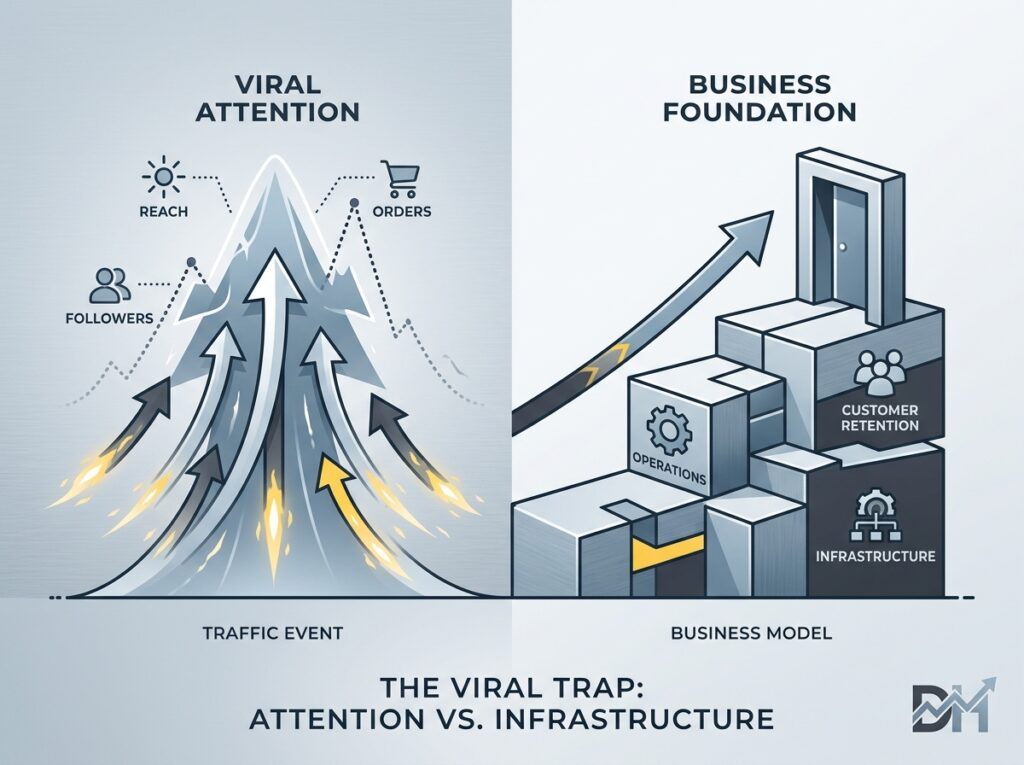
WHERE THE CRACKS ACTUALLY START
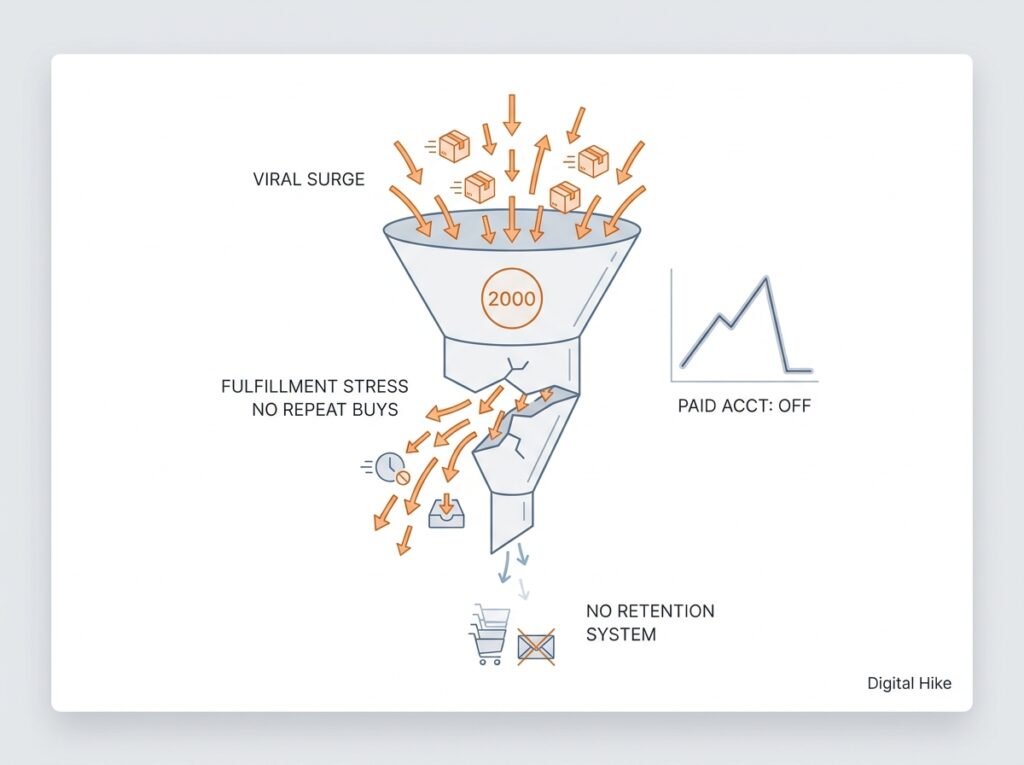
- Fulfilment breaks first. A brand built for fifty orders a day suddenly gets two thousand. Shipping delays pile up, support inboxes overflow, and the same platform that made the brand go viral again — this time for the wrong reasons.
- The product wasn’t built for repeat purchase. Viral products are often novelty-driven. They sell once on curiosity. Without a reason to buy again, the brand becomes entirely dependent on finding the next viral moment, which rarely repeats on command.
- There was no retention system in place. No email flow, no WhatsApp remarketing, no loyalty structure. Every customer who bought during the spike simply vanished afterward, because nothing was built to bring them back.
- The ad account was never turned on. Many viral brands never build a paid acquisition engine, because organic reach made it feel unnecessary. When the algorithm inevitably stops favouring their content, there’s no backup channel generating demand.
THE BRANDS THAT SURVIVE DO ONE THING DIFFERENTLY
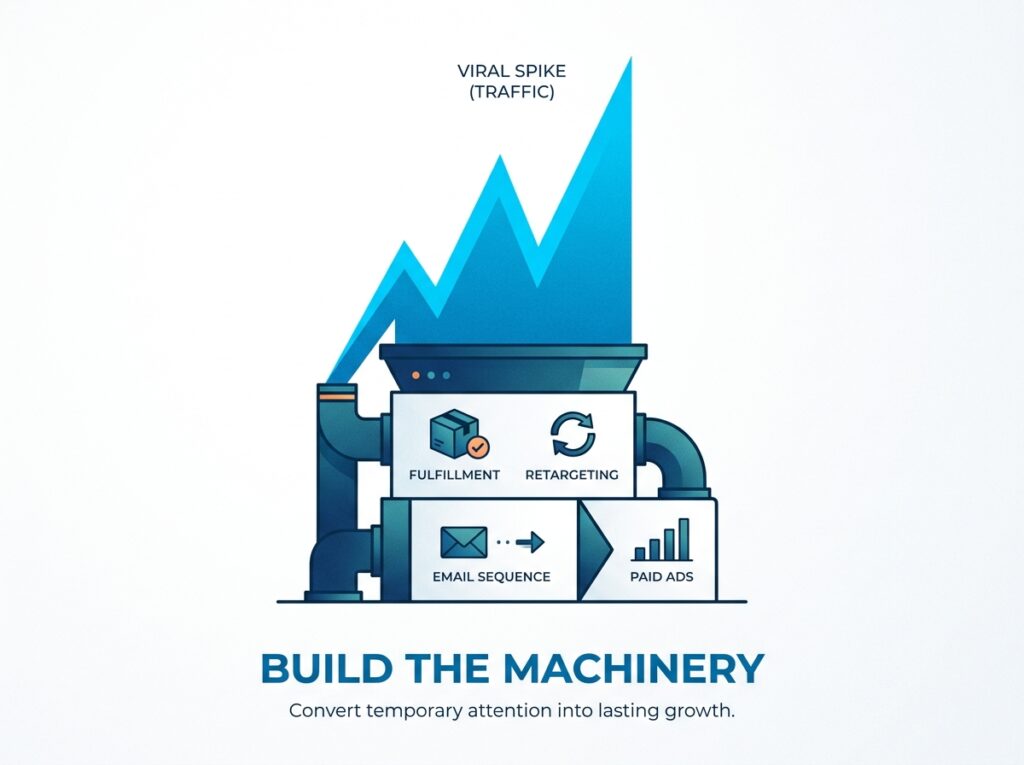
They treat a viral spike as free top-of-funnel traffic — a gift, not a growth strategy — and immediately build the machinery to capture and convert it. That machinery is unglamorous. It’s a fast, reliable fulfilment process. It’s a retargeting funnel that follows up with everyone who visited but didn’t buy. It’s an email and WhatsApp sequence that turns a one-time buyer into a three-time buyer. It’s a paid ads account that’s already warmed up and ready to sustain demand the moment organic reach cools off, because it always cools off. None of this is exciting to build. It doesn’t get millions of views. But it’s the difference between a brand that survives its own viral moment and one that gets buried by it.
A REALISTIC TIMELINE OF WHAT SHOULD HAPPEN
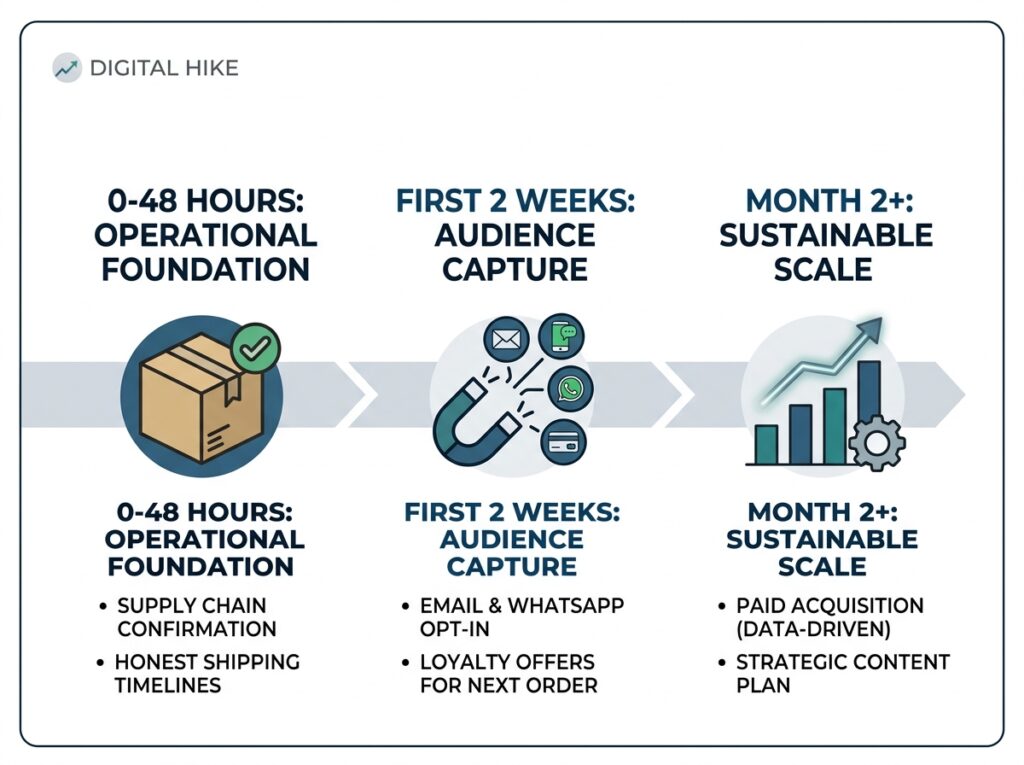
In the first 48 hours of a spike, the priority isn’t more content — it’s operations. Confirm the supply chain can handle the volume, and be honest with customers about shipping timelines rather than overpromising and losing their trust permanently. In the first two weeks, every single buyer needs to enter some kind of retention system — email capture, WhatsApp opt-in, a loyalty offer for their next order. This is the single highest-leverage window in the brand’s entire life, and most founders spend it celebrating instead of capturing it. By month two, paid acquisition needs to be live and running, built using the audience data collected from the viral spike itself — lookalike audiences from actual buyers convert far better than cold targeting ever will. This is also when a genuine content strategy needs to replace the accidental one, because relying on lightning to strike twice is not a plan.
THE UNCOMFORTABLE TRUTH ABOUT VIRALITY
Going viral is not the hard part anymore. With the right creative and a bit of luck, almost any product can get a moment of attention in today’s algorithm-driven feeds. The hard part — the part that actually separates a real business from a brand that trends for a week and disappears — is everything that happens after the views stop counting. Founders chasing virality as a growth strategy are optimizing for the wrong outcome. The goal was never the view count. It was always the business standing on the other side of it, still standing six months later, with customers who came back a second time.
Digital Hike works with D2C and e-commerce brands to build exactly this — the funnels, retention systems, and paid infrastructure that turn a lucky spike into sustainable revenue. If a viral moment has already happened for your brand, or you’re building toward one, book a free strategy call before the traffic arrives, not after it leaves. There’s a quieter lesson in all of this too, one that applies even to founders who never go viral at all. The businesses that eventually win in D2C are rarely the ones with the single best piece of content. They’re the ones who built the boring infrastructure — fulfilment, retention, paid acquisition — before they needed it, so that whenever attention does arrive, whether from a viral Reel, a press mention, or a slow and steady content strategy, there’s an actual system in place to catch it and turn it into a customer who sticks around.
If there’s one number worth tracking above all others in the aftermath of a spike, it’s repeat purchase rate over the following ninety days. Everything else — the views, the follower count, the initial order spike — is noise unless that number holds up. It’s the single clearest signal of whether a brand actually converted a moment of attention into something durable, or simply borrowed it for a season.